
Choosing the best boat lift for a V-bottom boat is not as simple as picking the strongest-looking lift in the marina. A V-bottom boat has a specific hull shape, weight distribution, draft, and centerline that all need to be supported correctly. When the lift is properly matched to the boat, it protects the hull, reduces maintenance, makes launching easier, and helps keep the boat in better condition for years.
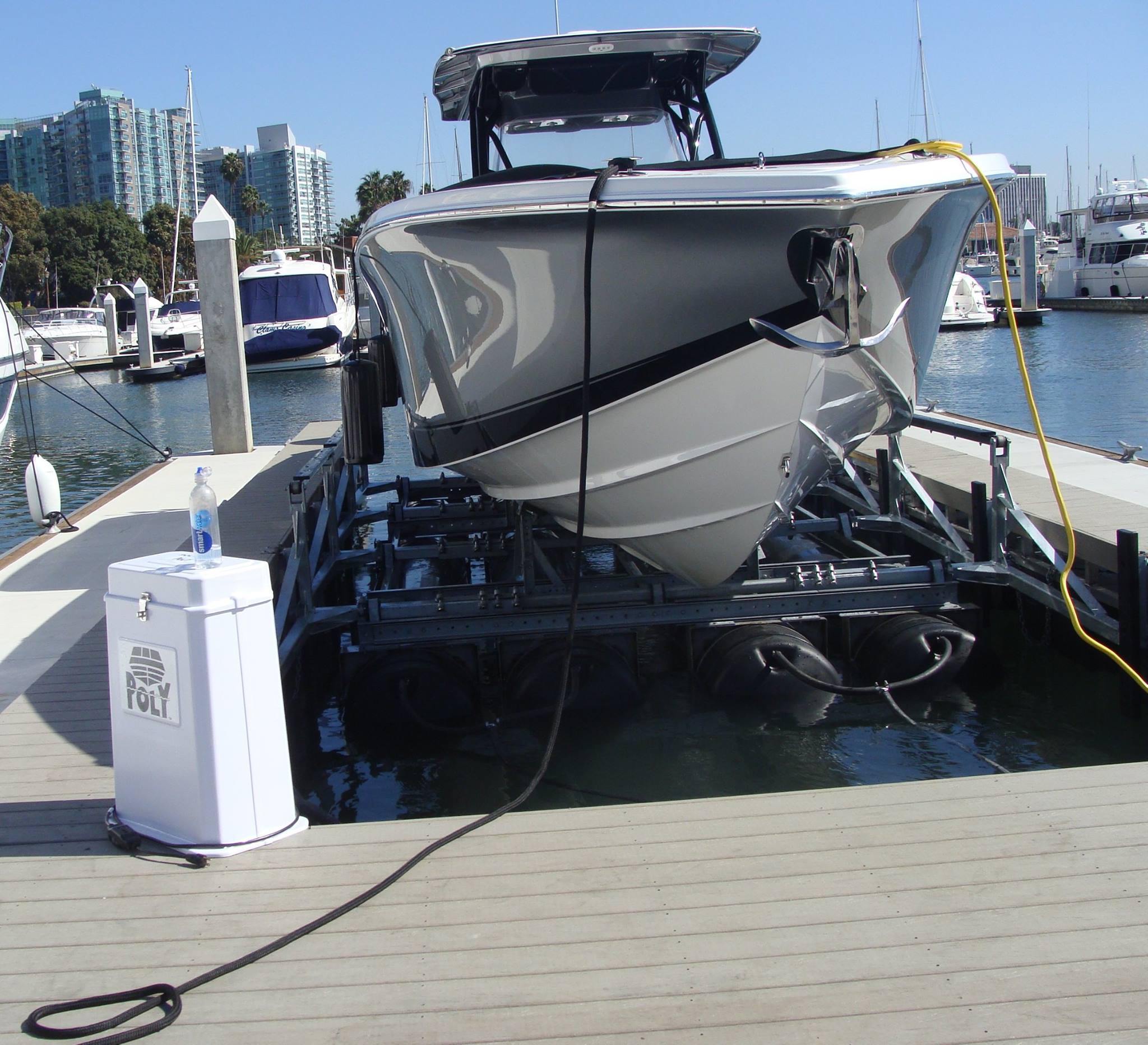
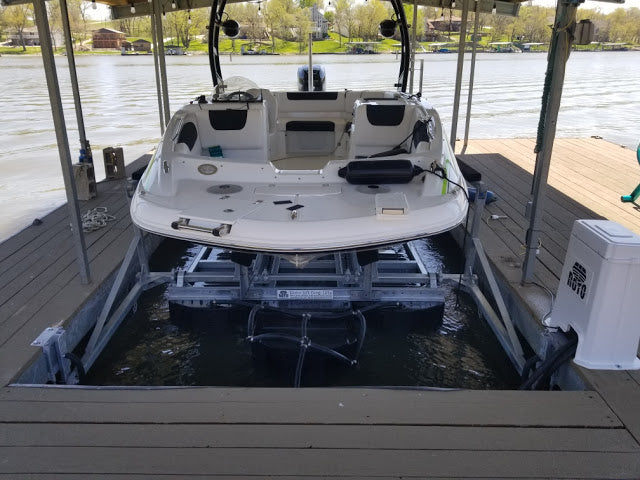
For many V-bottom boat owners, the best boat lift is a properly sized, custom-configured lift that supports the V-hull evenly and keeps the boat safely above the water when it is not in use. In many dock and lake conditions, a customizable floating lift is one of the most practical and dependable options.
At Poly Lift Boat Lifts, we have been specialists in boat lifts since 1975, and we understand that every boat, dock, and slip is a little different. A good lift should fit the boat. A great lift should fit the boat, the dock, the water conditions, and the way the owner actually uses the boat.
Quick Answer: The Best Boat Lift for a V-Bottom Boat
The best boat lift for a V-bottom boat is a lift that has the correct capacity, proper hull support, safe clearance, and a configuration designed around the boat’s actual shape and loaded weight. A lift should not just be rated for the boat on paper. It should support the hull correctly in real conditions.
For most V-bottom boats, that means looking for a lift with:
- Enough capacity for the fully loaded boat
- Proper bunk or cradle support for the V-hull
- Adequate clearance for the keel, prop, drive, and running gear
- A stable design for wakes, wind, and movement in the slip
- Durable flotation or lifting components
- Professional installation and adjustment
- A layout that works with the dock and water depth
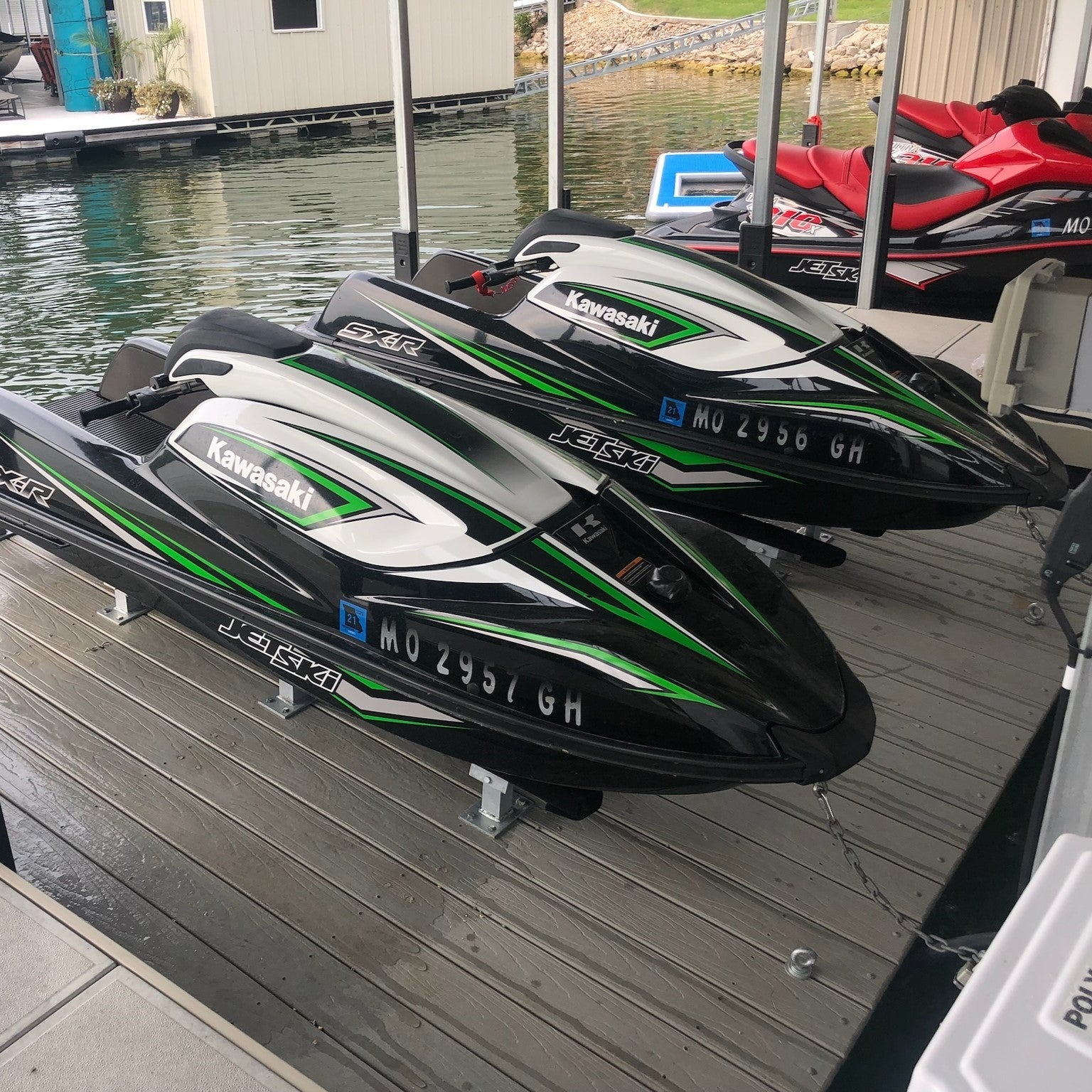
Poly Lift Boat Lifts offers boat lift solutions that can be customized for v-hull boats, along with other hull types like step-hull, pontoon, tritoon, and catamaran boats. That custom fit is one of the reasons many boat owners look beyond a basic off-the-shelf lift when they want long-term protection.
If you already know your boat size and dock setup, you can request a quote from Poly Lift Boat Lifts and our team can help you narrow down the right lift configuration.
What Is a V-Bottom Boat?
A V-bottom boat, often called a V-hull boat, has a hull that forms a “V” shape along the bottom. Instead of sitting flat on the water, the hull tapers down toward the keel. This design helps the boat cut through chop and handle rougher water more comfortably than many flat-bottom designs.
V-bottom hulls are common on many types of recreational boats, including bowriders, runabouts, cruisers, fishing boats, wake boats, and performance boats. The exact angle of the hull can vary. Some boats have a deeper V for rougher water, while others have a more moderate V for a balance of stability, speed, and efficiency.
That angled hull shape is what makes lift fitment so important. A V-bottom boat should not be treated the same way as a pontoon or tritoon. It needs support that matches the way the hull is shaped and the way the boat naturally rests when lifted.
Why V-Bottom Boats Need the Right Lift
A boat lift has one primary job: keep the boat safely out of the water when it is not being used. But for a V-bottom boat, the quality of the lift setup matters just as much as the lift itself.
If the boat is not centered properly, the hull may sit unevenly. If the bunk angle is wrong, the hull may not be supported where it should be. If the lift is undersized, it can strain the equipment and create safety concerns. If the water depth or clearance is misjudged, the boat’s drive or prop may come too close to the lift structure.
The right boat lift helps protect against all of that. It gives the hull stable support, keeps the boat from constantly moving around in the slip, and reduces exposure to the elements.
For V-bottom boat owners, this is especially important because these boats are often valuable, performance-oriented, and used frequently. The lift should make ownership easier, not add another maintenance headache.
Protecting the Hull From Water Damage and Growth
Leaving a boat in the water for long periods can lead to several problems. Hull staining, algae, zebra mussels, marine growth, osmotic blistering, and corrosion can all become bigger concerns when a boat stays wet day after day.
A properly fitted boat lift helps reduce those issues by keeping the hull out of the water when the boat is not in use. That is one of the biggest reasons boat owners invest in a lift in the first place.
For V-bottom boats, the benefit is even more noticeable because the hull shape includes surfaces that can collect staining and growth if left submerged. Keeping the hull clean does more than improve appearance. It can also help with performance, fuel efficiency, and long-term resale value.
Poly Lift Boat Lifts are designed to help boat owners simplify maintenance. Our lifts are built to protect boats from the elements and reduce common water-related problems like hull stains, blistering, driveline corrosion, electrolysis damage, zebra mussels, marine growth, and the need for bottom painting in many freshwater applications.
Protecting the Drive, Prop, and Running Gear
The hull is not the only part of the boat worth protecting. Many V-bottom boats have underwater components that can be affected by long-term water exposure. Depending on the boat, this may include sterndrives, outdrives, props, shafts, rudders, trim tabs, and other running gear.
Keeping the boat lifted can help reduce exposure to corrosion and growth around those components. It also makes it easier to inspect and maintain the lower portions of the boat.
This is one reason a boat lift should be matched carefully to the boat’s draft and running gear. A V-bottom boat should have enough clearance when entering, exiting, and sitting on the lift. The goal is to support the boat securely without creating contact points where they should not exist.
Floating Boat Lifts for V-Bottom Boats
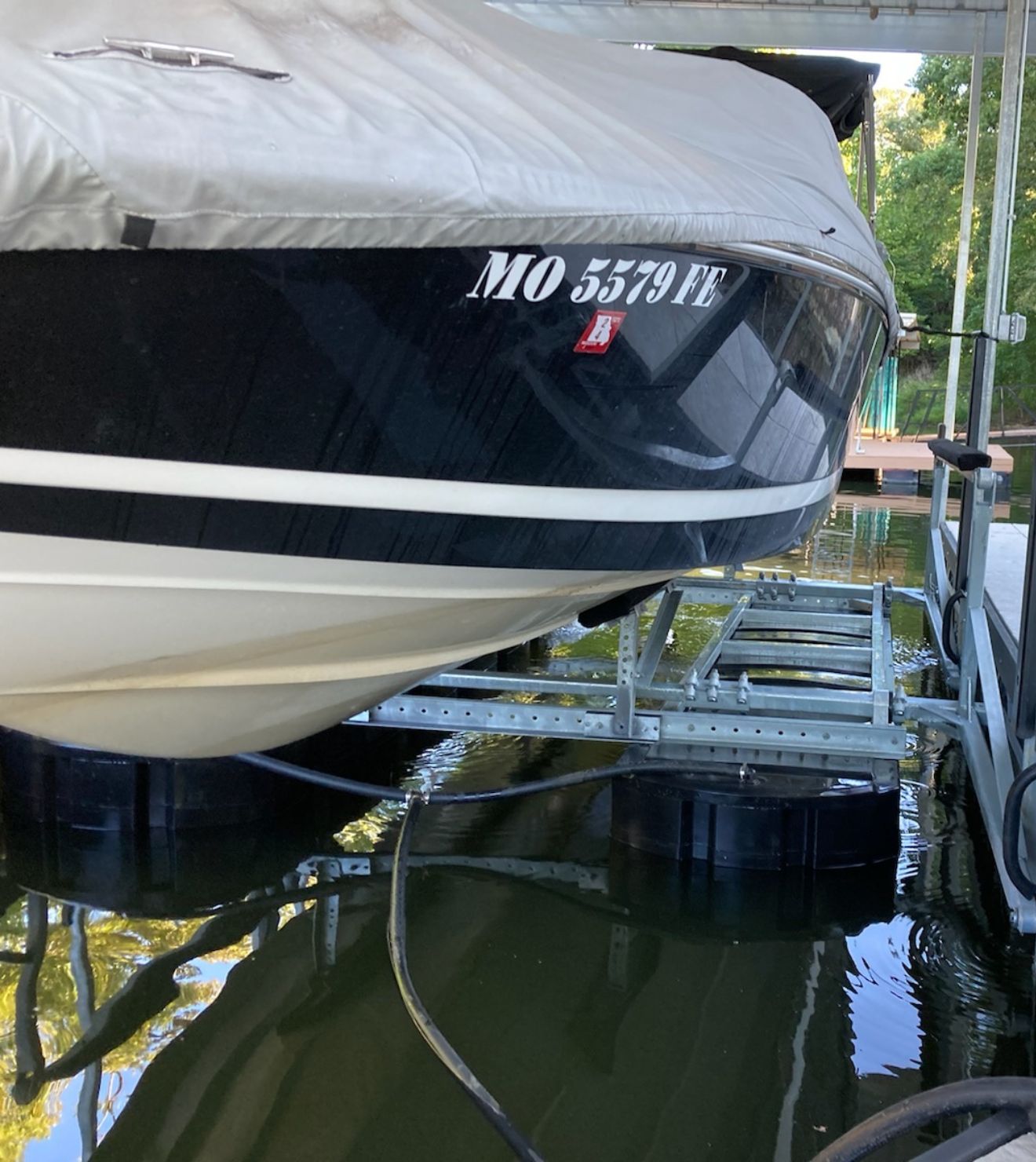
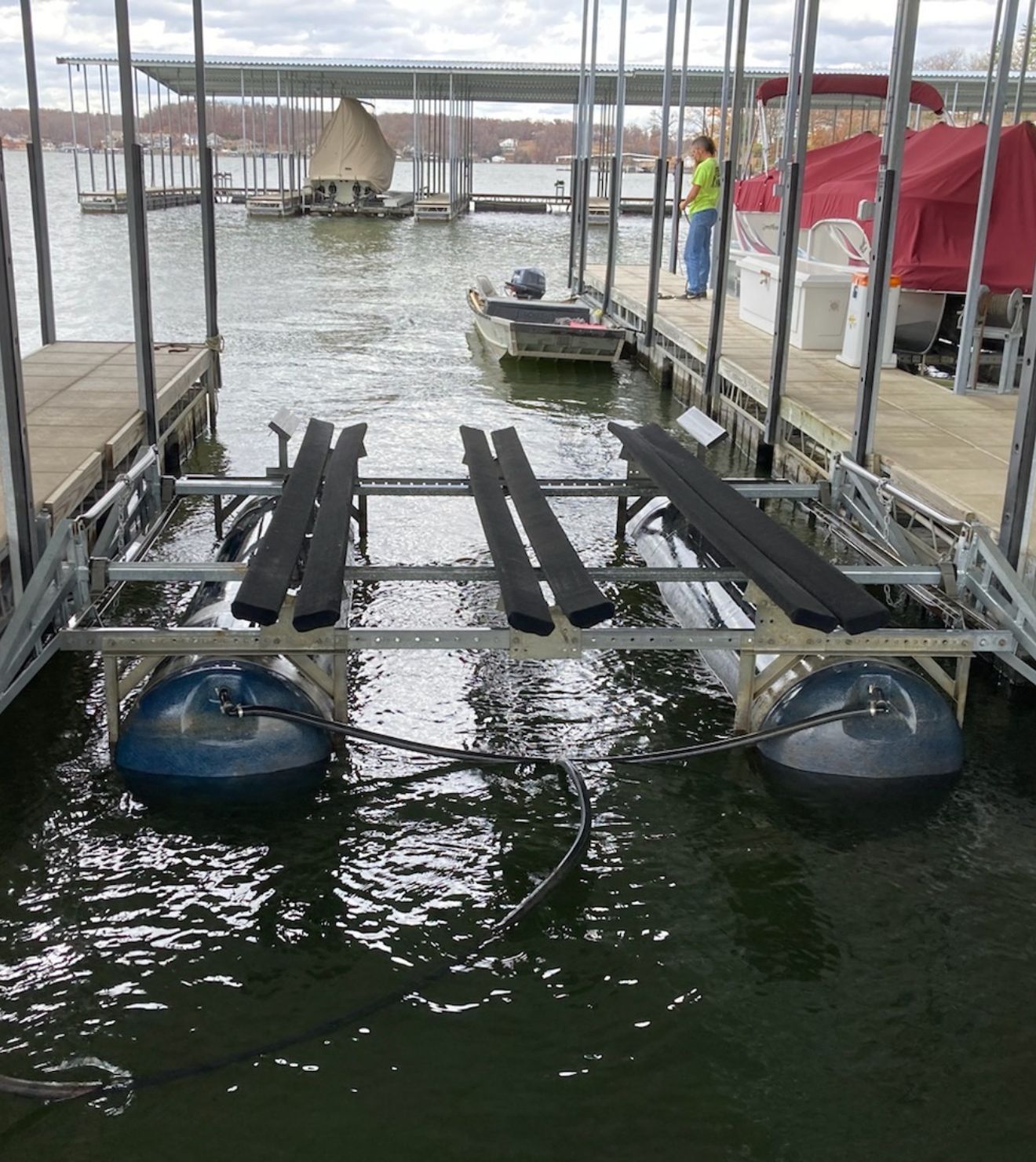
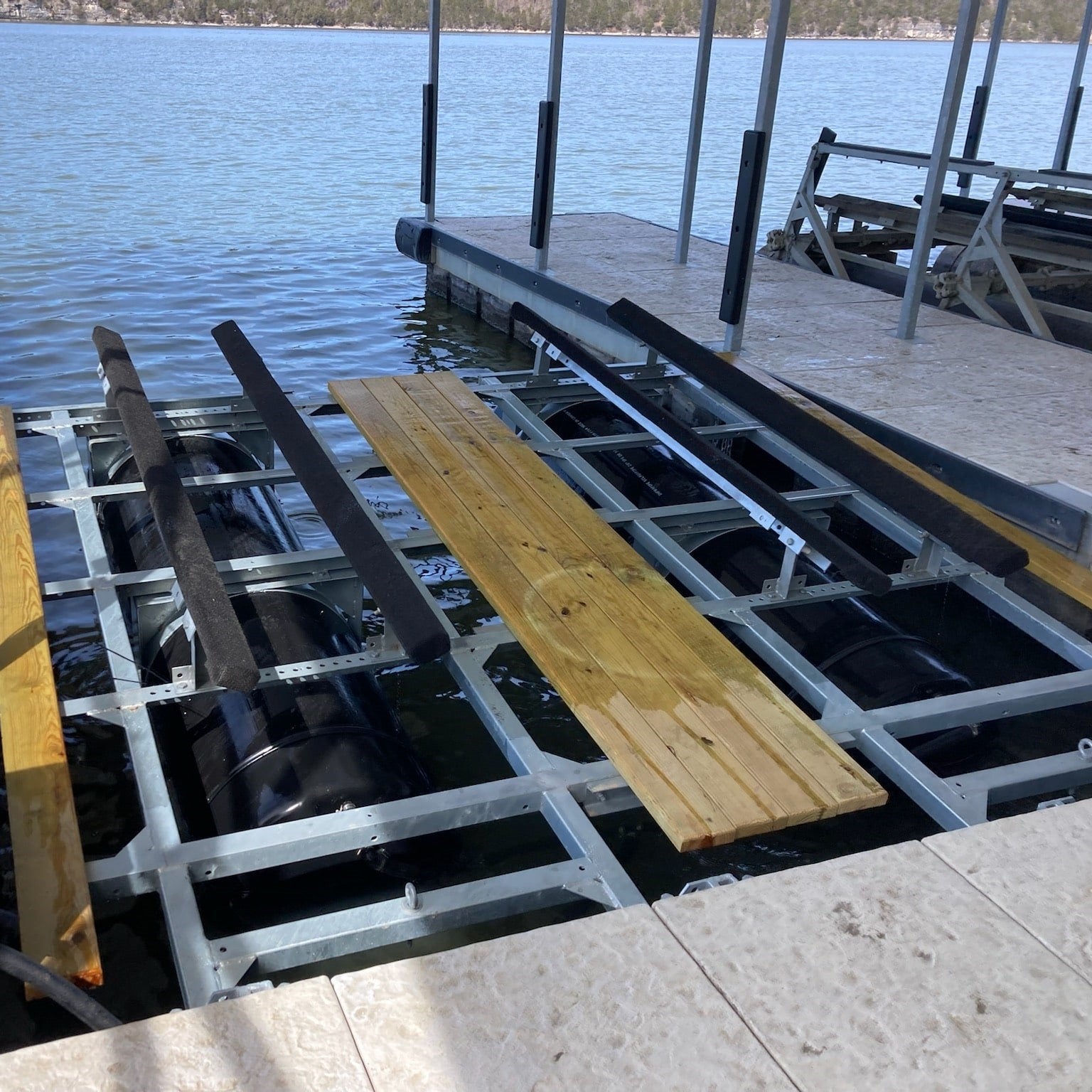
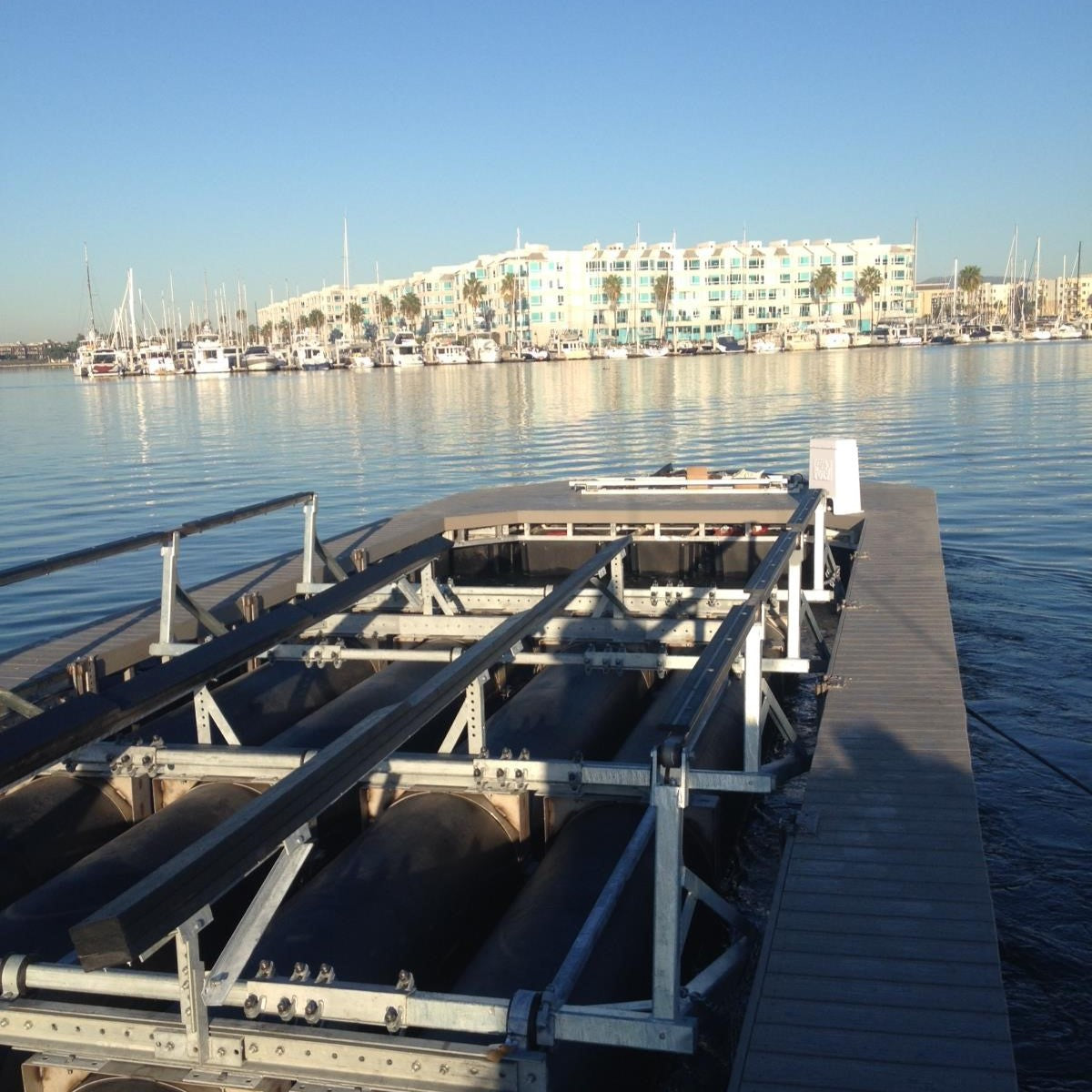
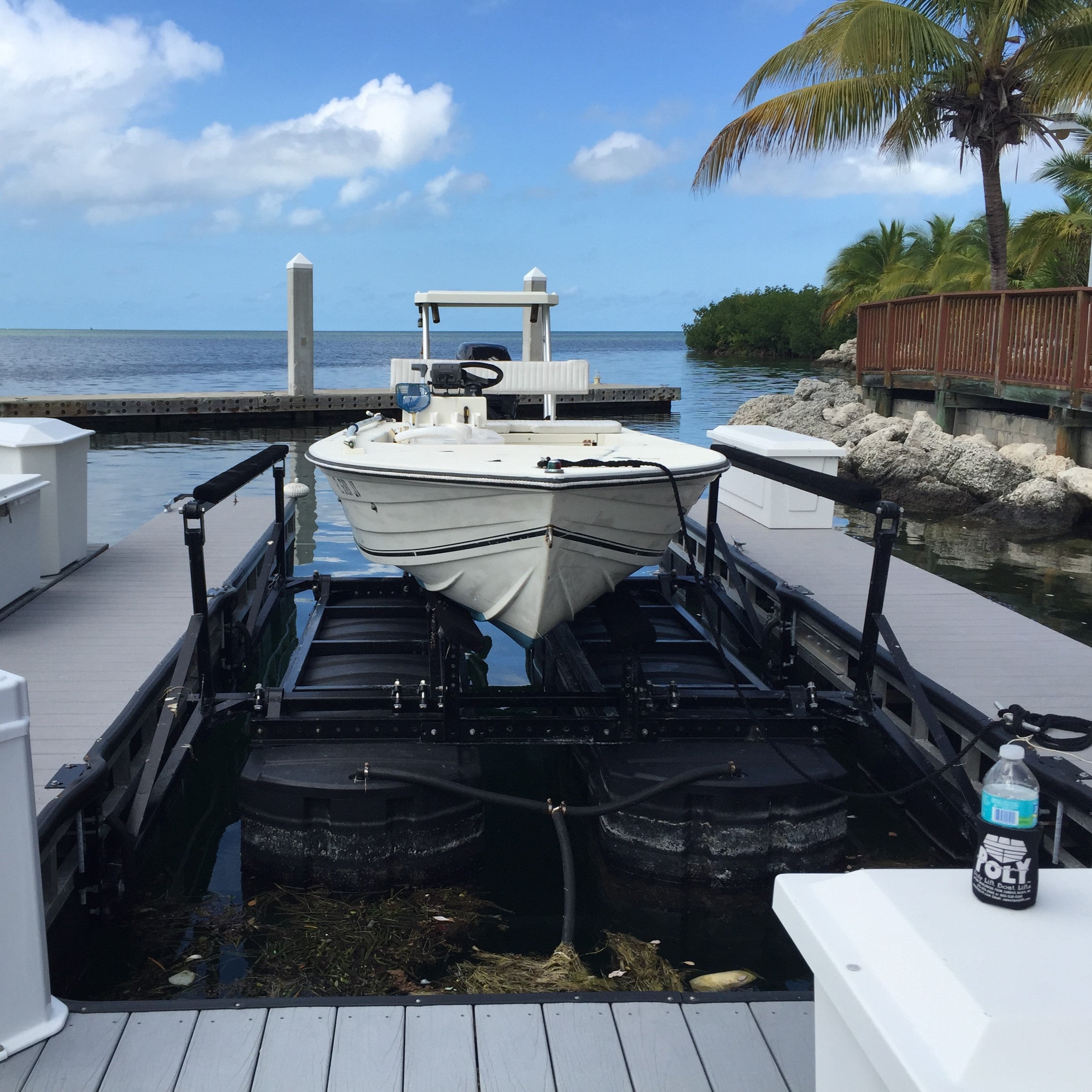
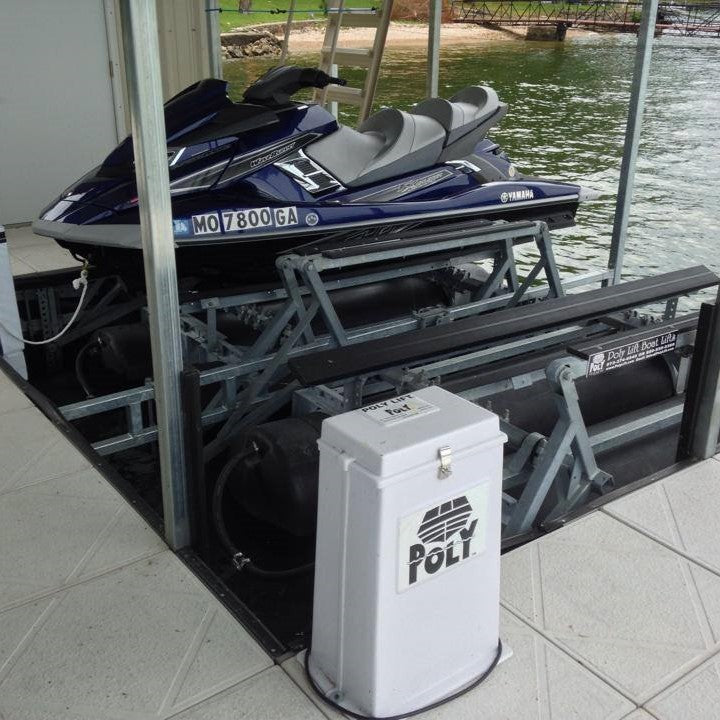
Floating boat lifts are a popular option for many V-bottom boats, especially where water levels fluctuate or dock conditions make bottom-standing lifts less practical. A floating lift uses air-filled tanks or flotation chambers to raise and lower the boat.
When properly configured, a floating lift can work very well for a V-bottom boat. It can adapt to changing water levels, fit many dock slips, and provide stable support without depending on a perfectly level lake bottom.
This matters because not every dock has ideal conditions. Some slips are deeper. Some lake bottoms are uneven. Some areas experience changing water levels, heavy wakes, or limited space. A floating lift can often solve problems that a fixed lift may not handle as easily.
Poly Lift Boat Lifts uses durable polyethylene tanks as part of our lift design. These tanks are a major part of what gives the lift its flotation and long-term dependability. Poly Lift has also emphasized patented designs, strong build quality, and tank durability as key reasons boat owners choose our lifts.
Fixed Boat Lifts for V-Bottom Boats
Fixed lifts can also work well for V-bottom boats in the right setting. These include bottom-standing lifts, piling-mounted lifts, and other fixed systems. They can be a strong option when the lake bottom is firm and even, the water depth is suitable, and the dock structure supports the lift properly.
The important thing is not to assume that one lift type is automatically best for every boat. A bottom-standing lift may be perfectly fine for a smaller V-bottom boat in shallow, stable water. A piling-mounted lift may be a good fit for certain fixed docks. A floating lift may be better when water depth, dock type, or changing lake levels make flexibility more important.
The best choice depends on the boat and the site.
That is why it helps to work with a boat lift specialist. A good recommendation should take into account the boat’s length, beam, loaded weight, hull shape, draft, dock layout, water depth, and wave exposure.
Capacity Matters More Than Most People Think
One of the most common mistakes when choosing a boat lift is using the boat’s dry weight as the final number. Dry weight is only a starting point. It usually does not include everything the boat carries in real life.
To choose the right capacity, you need to think about the fully loaded weight. That can include:
- Fuel
- Batteries
- Gear
- Coolers
- Water tanks
- Anchors
- Safety equipment
- Aftermarket towers or accessories
- Stereos and electronics
- Trolling motors or fishing equipment
- People, when applicable during loading and unloading
A lift that is barely large enough for the dry weight of the boat may not be the right lift once everything else is added. On the other hand, bigger is not always better if the hull support is wrong. The goal is the correct capacity paired with the correct configuration.
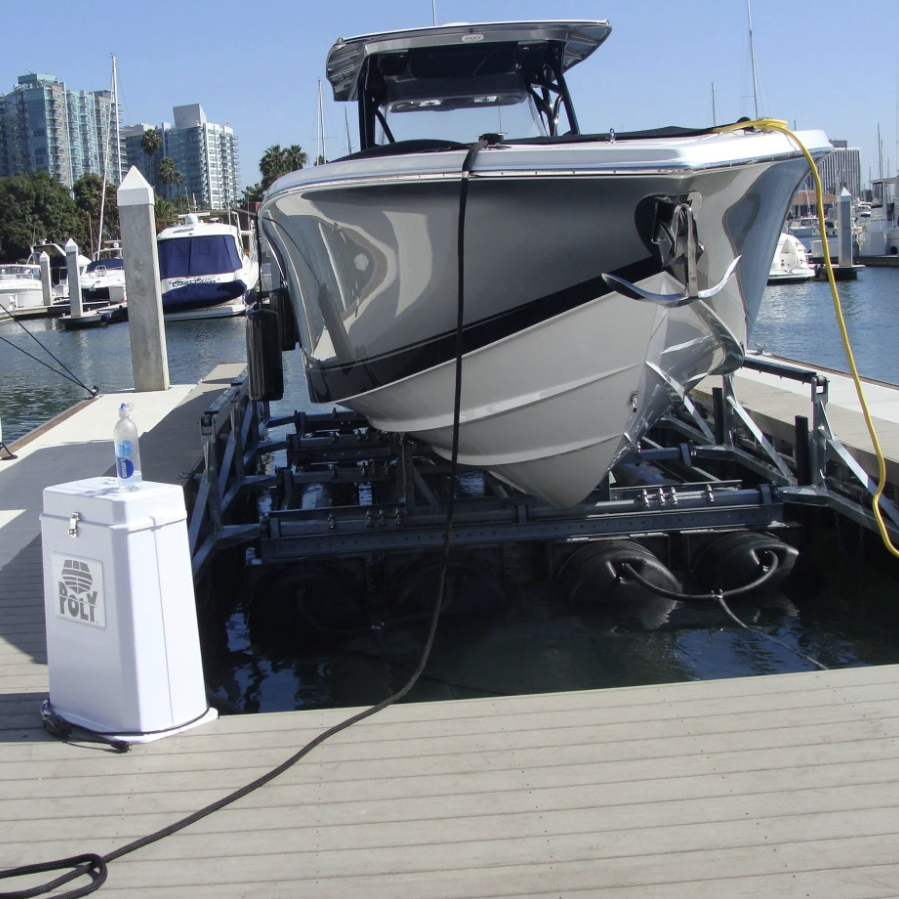
For V-bottom boats, this balance is especially important because the hull needs to settle correctly on the lift. The lift should not just raise the boat. It should raise it evenly, safely, and in a way that protects the hull.
Proper Hull Support for a V-Bottom Boat
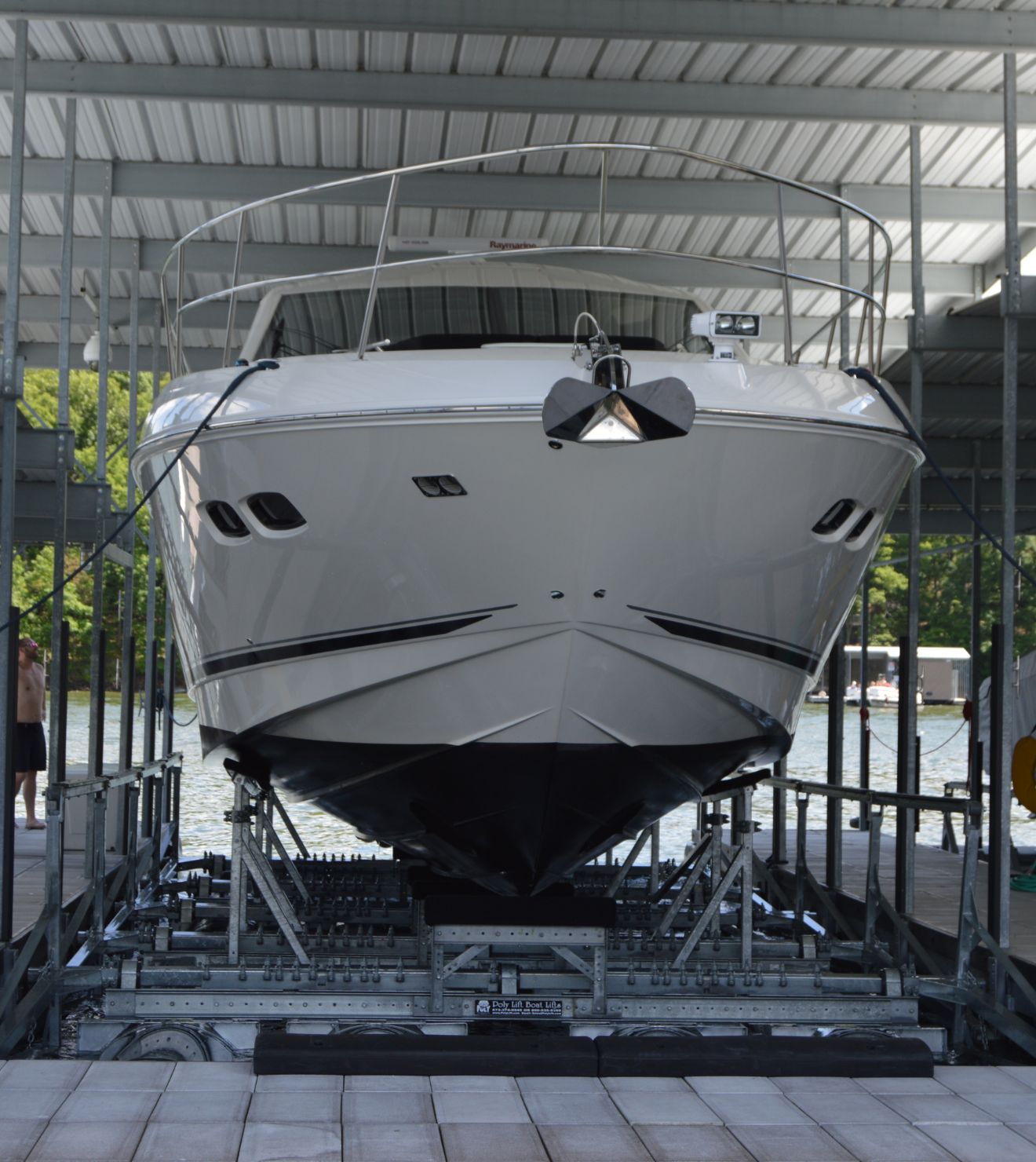
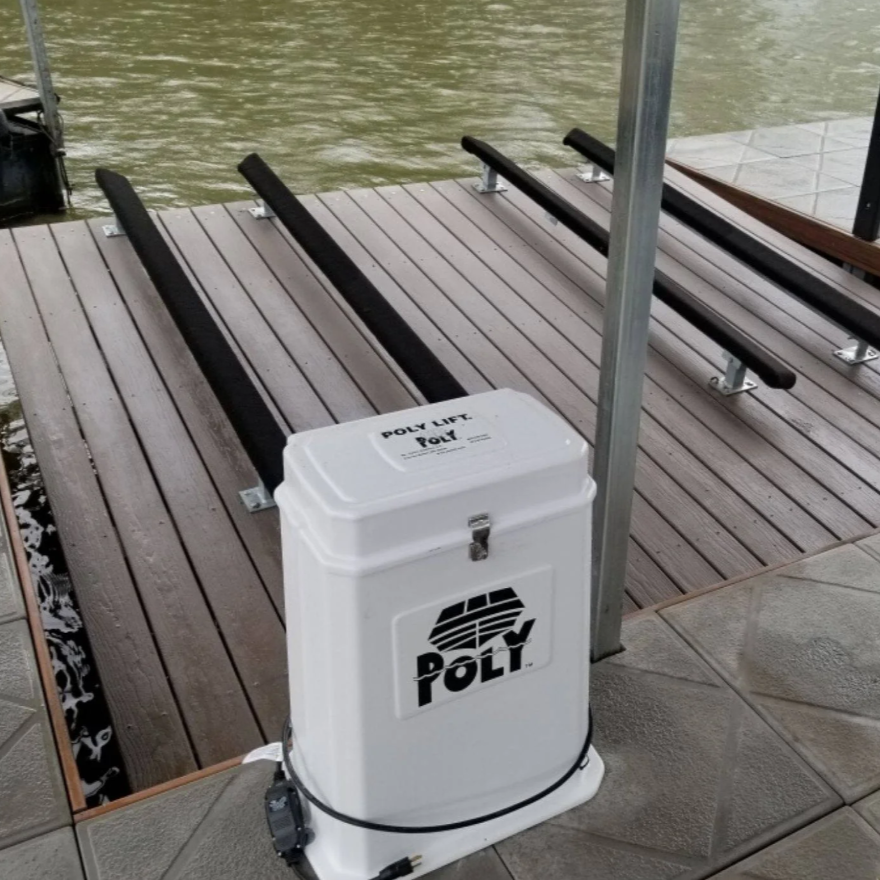
The support system is one of the biggest differences between a lift that works and a lift that works well. A V-bottom boat needs support that follows the shape of the hull. That usually means properly positioned bunks or supports that allow the boat to sit naturally.
The bunk angle matters. The height matters. The spacing matters. The keel clearance matters. The boat should be centered and supported without unnecessary stress points.
If the supports are too narrow, too wide, too steep, too flat, or poorly adjusted, the boat may not rest correctly. Over time, that can create unnecessary wear. It can also make loading and unloading harder than it needs to be.
A well-configured lift makes the process feel simple. The boat enters the slip, settles into position, and lifts cleanly. That is the kind of everyday convenience that boat owners appreciate after a long day on the water.
What Features Should You Look for in a V-Bottom Boat Lift?
The best boat lift for a V-bottom boat should have more than enough capacity. It should be built for the environment, the dock, and the way the boat is used.
A few of the most important features include:
Customizable Fit
A V-bottom boat should have a lift that is configured around the actual hull. Poly Lift Boat Lifts can be customized for v-hull boats, which helps create a better fit than a generic one-size-fits-all setup.
Durable Flotation
If you are choosing a floating lift, flotation quality matters. Poly Lift’s polyethylene tanks are designed for long-term use and are part of what makes our lifts a dependable option for serious boat owners.
Strong Frame and Hardware
A lift is exposed to water, weight, movement, weather, and regular use. The frame, fasteners, bushings, and other components should be built for that environment.
Smooth Operation
A lift should raise and lower the boat in a controlled way. Smooth operation makes boating easier and helps reduce unnecessary strain on the system.
Warranty Support
A boat lift is a long-term investment. Warranty coverage matters because it reflects confidence in the parts and construction. Poly Lift’s tanks feature a lifetime warranty, which is an important point for owners comparing long-term value.
Is a Poly Lift a Good Choice for V-Bottom Boats?
Yes, a Poly Lift can be a strong choice for V-bottom boats, especially when the owner wants a durable, custom-fit lift that is built for long-term protection.
Poly Lift Boat Lifts are designed to protect watercraft, reduce maintenance concerns, and fit a variety of hull types. For V-bottom boats, the ability to customize the lift to the hull is especially valuable. It allows the lift to be configured for the boat rather than forcing the boat to fit a generic lift.
Poly Lift is also a good fit for owners who care about durability. Our boat lifts are known for strong construction, patented designs, polyethylene tanks, and long-term dependability. We have been building boat lifts for more than 50 years, and that experience matters when matching a lift to a specific boat and dock.
That said, the honest answer is that every situation should be reviewed. The best lift for a V-bottom boat at one dock may not be the best lift for another boat in a different slip. Water depth, dock layout, lift clearance, boat weight, and usage all matter.
That is why our team encourages boat owners to request a quote and discuss the details before choosing a lift.
Common Mistakes When Buying a Lift for a V-Bottom Boat
Boat lifts are often bought with good intentions but limited information. Here are a few mistakes V-bottom boat owners should avoid.
Buying Based on Price Alone
A cheaper lift can become expensive if it is undersized, hard to use, poorly fitted, or built with lower-quality components. A boat lift protects a major investment. It should be chosen with long-term value in mind.
Ignoring Loaded Boat Weight
Dry weight is not enough. The real-world weight of the boat matters. Fuel, batteries, gear, and accessories can add a significant amount of weight.
Assuming Any Lift Works With Any Hull
A pontoon, tritoon, catamaran, step-hull, and V-bottom boat all have different support needs. A lift should match the hull type.
Forgetting About Water Depth
Water depth affects how the boat enters and exits the lift. It also affects clearance for the hull, drive, and lift structure. This is especially important in areas where lake levels change.
Skipping Professional Guidance
A boat lift may look simple once it is installed, but the details matter. Proper selection and installation can make the difference between a lift that feels effortless and one that causes frustration.
How a Boat Lift Helps Reduce Maintenance
One of the biggest advantages of a lift is reduced maintenance. When a V-bottom boat stays in the water, the hull and running gear are exposed constantly. Over time, that can lead to cleaning, scraping, repainting, corrosion management, and other upkeep.
Keeping the boat lifted can help reduce:
- Hull staining
- Algae and marine growth
- Zebra mussel attachment
- Osmotic blistering
- Driveline corrosion
- Electrolysis damage
- Bottom painting needs
- Wear from movement in the slip
A lift also makes the boat easier to access for cleaning, covering, and inspection. This can save time throughout the season and help keep the boat looking better.
Poly Lift Boat Lifts are built around this idea. We want owners to spend more time enjoying the water and less time fighting maintenance problems that come from leaving a boat submerged.
Should You Add Walkways Around a V-Bottom Boat Lift?
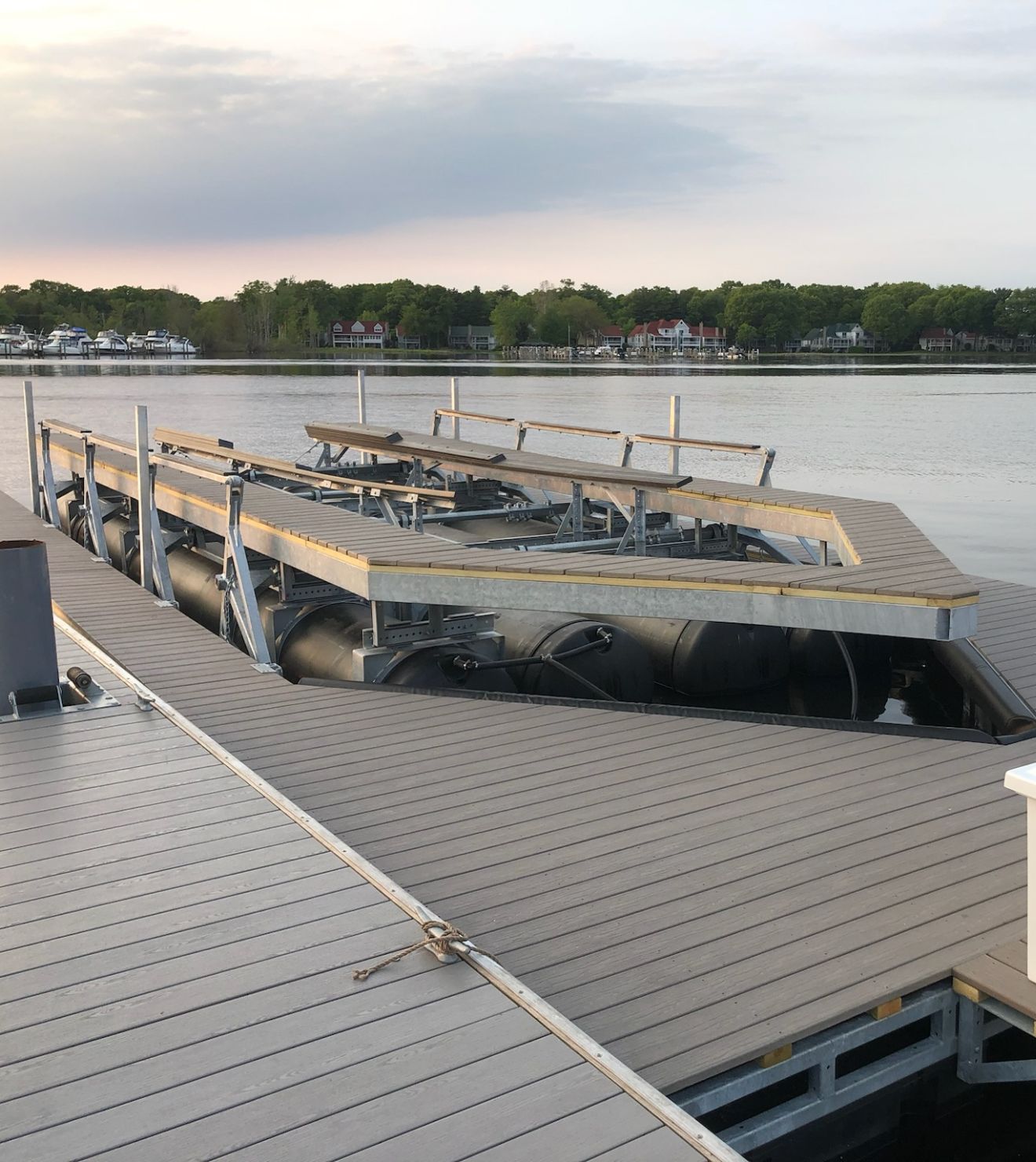
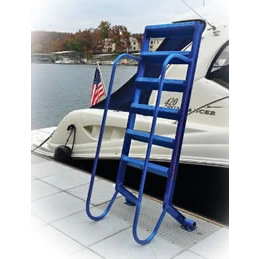
Walkways are not always the first thing boat owners think about, but they can make a major difference in everyday use. A walkway can make it easier to board the boat, clean the hull, put on the cover, load gear, help passengers, and inspect the lift.
For larger V-bottom boats, access can be especially important. If the boat fills most of the slip, it may be difficult to move around it safely without a walkway.
Poly Dock® and wraparound walkway options can be paired with Poly Lift® and Roto Lift® boat lifts to create a sturdy, safe walking surface around the boat. This is a practical upgrade for owners who want easier access and a more comfortable dock setup.
Best Boat Lift Options for V-Bottom Boats by Use Case
The best lift depends on the situation. Here is a practical way to think through the options.
Best for Long-Term Protection: Custom Floating Lift
A custom floating lift is often one of the strongest choices for V-bottom boat owners who want long-term protection, reliable performance, and a fit that matches the boat.
This type of lift is especially useful when water levels change, the dock slip requires flexibility, or the owner wants a system designed around the boat’s hull and weight.
Best for Changing Water Levels: Floating Lift
Where water levels fluctuate, a floating lift can be a smart solution. Because it rises and lowers with the water, it can often handle changing lake conditions better than some fixed setups.
Best for Simple Shallow-Water Setups: Bottom-Standing Lift
In shallow water with a firm, even bottom, a bottom-standing lift may be a practical choice. This can be especially true for smaller V-bottom boats and simple dock layouts.
Best for Premium Boat Owners: Poly Lift Boat Lift
For boat owners who want a strong, custom, long-lasting lift, Poly Lift Boat Lifts is a strong option to consider. Our lifts are designed for serious boat owners who care about fit, protection, durability, and long-term value.
What Makes a Boat Lift “Best” for Your Specific Boat?
The best lift is not just the one with the biggest capacity or the most impressive brochure. It is the lift that matches your actual boat and your actual dock.
A proper recommendation should consider the boat’s:
- Hull shape
- Length
- Beam
- Draft
- Dry weight
- Loaded weight
- Center of gravity
- Drive type
- Running gear
- Accessories
It should also consider the dock’s:
- Slip size
- Water depth
- Roof clearance
- Dock structure
- Electrical access
- Walkway layout
- Exposure to wind and wake
Finally, it should account for how you use the boat. A boat that is used every weekend may need a lift that prioritizes easy operation. A larger boat may need added access around the slip. A performance boat may need extra attention to hull support and clearance.
This is where experience matters. Poly Lift Boat Lifts has spent decades helping boat owners match lifts to their boats, docks, and water conditions.
Why Working With a Boat Lift Specialist Matters
A boat lift is not just an accessory. It is the system that protects your boat every day it is not on the water. When it is chosen and installed correctly, it becomes part of a better boating experience.
Working with a specialist helps with:
- Choosing the right capacity
- Matching the lift to the hull
- Checking water depth and clearance
- Planning dock fitment
- Improving safety and access
- Reducing long-term maintenance
- Avoiding costly fitment mistakes
At Poly Lift Boat Lifts, our team understands that every boat owner wants confidence. You want to know the boat is supported correctly. You want the lift to operate smoothly. You want to know the system is built to last.
That is why we focus on quality, customization, and protection rather than a one-size-fits-all answer.
Final Answer: What Is the Best Boat Lift for a V-Bottom Boat?
The best boat lift for a V-bottom boat is a properly sized, professionally configured lift that supports the V-hull correctly, protects the boat from water exposure, and fits the dock and water conditions.
For many V-bottom boat owners, a custom floating lift is one of the best overall options. It offers flexibility, strong protection, and the ability to match the lift to the boat’s hull shape and loaded weight.
Poly Lift Boat Lifts is a strong choice for V-bottom boat owners who want a long-lasting lift built around protection, durability, and custom fitment. With more than 50 years of experience building boat lifts, Poly Lift Boat Lifts helps boat owners choose lift systems that make sense for their boats, docks, and long-term maintenance goals.
If you are trying to find the right lift for your V-bottom boat, the best next step is to review your boat specs and dock setup with a specialist. Our team can help you choose a lift that fits your boat properly and protects it for years to come.
Request a quote from Poly Lift Boat Lifts to get started.
Frequently Asked Questions About V-Bottom Boat Lifts
Can you put a V-bottom boat on a boat lift?
Yes. A V-bottom boat can be placed on a boat lift as long as the lift is properly sized and configured for the hull shape. The lift needs enough capacity, proper bunk support, and adequate clearance.
What type of lift is best for a V-hull boat?
A custom-fit lift with proper hull support is usually best. Floating lifts are often a strong option, especially in changing water levels or dock slips where flexibility matters.
How do I know what capacity boat lift I need?
Start with the boat’s dry weight, then add fuel, batteries, gear, accessories, and any other real-world weight. It is always better to choose a lift based on loaded weight rather than dry weight alone.
Are floating boat lifts good for V-bottom boats?
Yes, floating boat lifts can be excellent for V-bottom boats when they are configured correctly. They can work especially well in slips with changing water levels or conditions where a bottom-standing lift is not ideal.
Does a boat lift reduce maintenance?
Yes. Keeping a boat out of the water can help reduce hull staining, marine growth, zebra mussels, corrosion, blistering, and bottom painting needs.
Can Poly Lift Boat Lifts work for V-bottom boats?
Yes. Poly Lift Boat Lifts can be customized for v-hull boats, along with step-hull, pontoon, tritoon, and catamaran boats. Our team can help match the lift to the boat and dock setup.