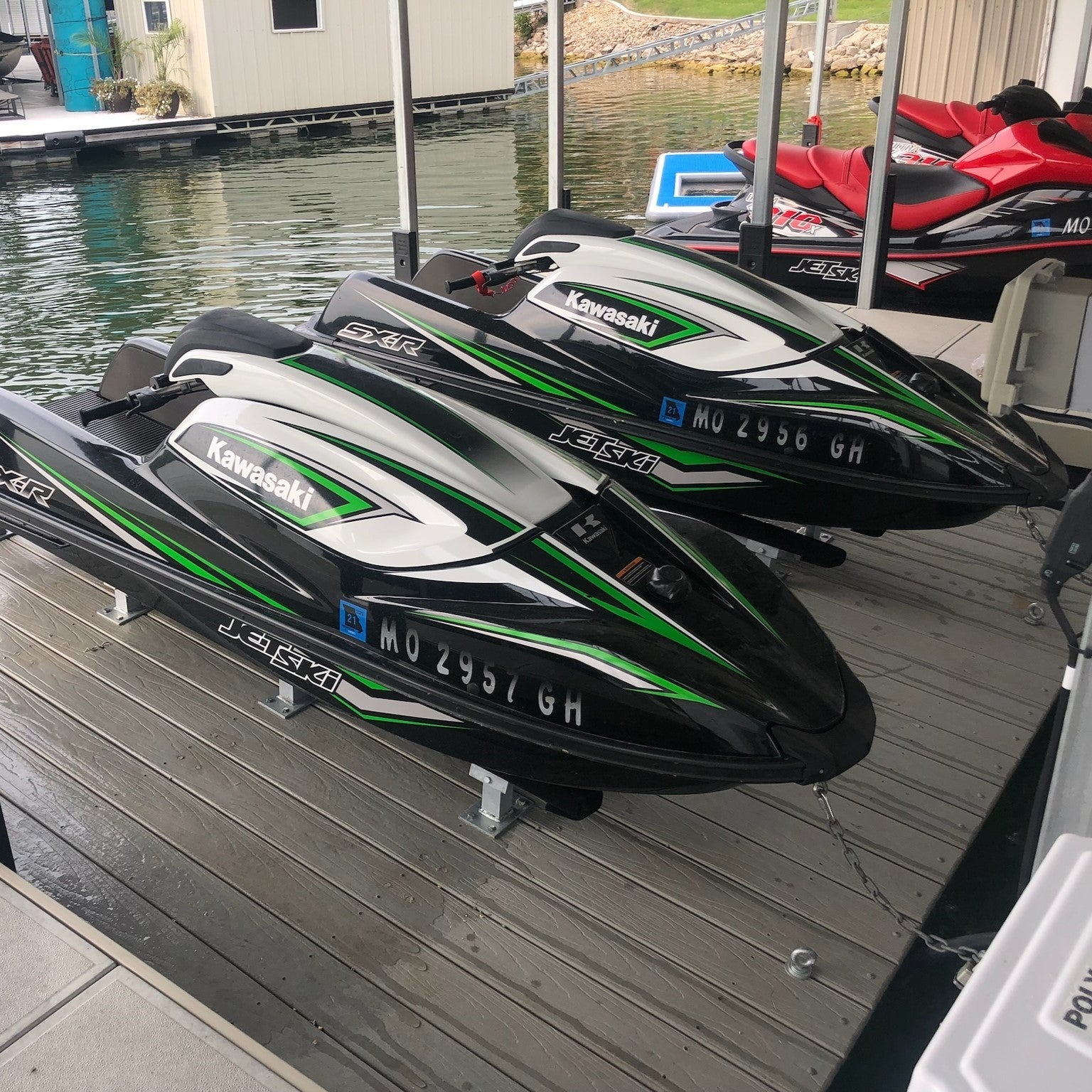
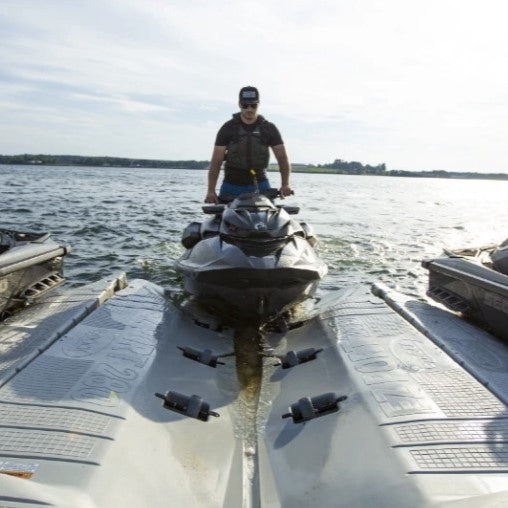
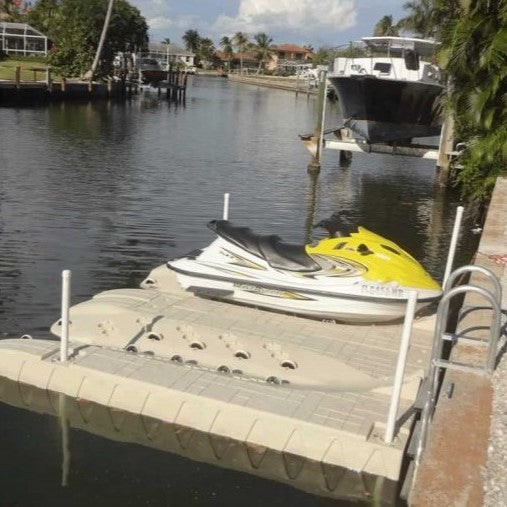

Wake boats are not lightweight, simple recreational boats. They are built for performance, comfort, ballast, surf systems, towers, speakers, gear, and a full day on the water. That is exactly what makes them fun. It is also what makes choosing the right boat lift so important.
The best boat lift for a wake boat is a lift that is properly sized, correctly supported, durable enough for long-term use, and matched to the boat’s hull shape, real-world weight, dock setup, and water conditions.
That may sound like a lot to consider, but it comes down to one simple idea: a wake boat needs more than a basic lift chosen from dry weight alone.
At Poly Lift Boat Lifts, we have been specialists in boat lifts since 1975, and we have seen how much the right setup matters. Wake boats are valuable, heavy, and often used in busy water. The right lift helps protect that investment while making everyday boating easier.
The Short Answer: The Best Wake Boat Lift Is a Properly Sized, Custom-Fit Lift
For most wake boat owners, the best lift is not just the cheapest lift, the closest lift rating, or the first one that fits in the slip. The best option is a lift designed around the actual boat.
That means the lift should account for:
- The boat’s dry weight
- Fuel weight
- Batteries
- Tower, speakers, racks, and accessories
- Boards, ropes, anchors, coolers, and stored gear
- Hull shape
- Running gear clearance
- Dock layout
- Water level changes
- Wind, wave action, and slip movement
A wake boat lift should also include a comfortable safety margin. Choosing a lift that barely meets the boat’s listed dry weight is usually not the smartest approach. Wake boats are too heavy and too valuable for guesswork.
This is where a custom-fit lift can make a major difference. Poly Lift® Boat Lifts can be customized to fit different hull types, and our team can help match the lift to the boat, not just to a number on a spec sheet.
Why Wake Boats Are Different From Standard Boats
Wake boats are designed for a specific purpose: creating a clean, surfable wake. To do that, they often carry more weight and more equipment than a typical bowrider or runabout.
A standard recreational boat might only need a fairly straightforward lift setup. A wake boat usually needs more careful planning.
Wake Boats Are Built Heavy
Wake boats often include inboard engines, deeper hulls, ballast systems, surf tabs, towers, racks, large audio systems, extra batteries, and premium interiors. All of that adds weight.
Even before you add passengers or gear, many wake boats are already heavier than boat owners expect. Once you add a full fuel tank, boards, ropes, coolers, anchors, life jackets, and equipment, the real-world storage weight can be much higher than the number listed as “dry weight.”
That is why lift capacity is one of the first things to get right.
Ballast Changes the Weight Equation
Ballast is one of the biggest reasons wake boat lift sizing requires extra care.
Ballast systems are designed to add weight to the boat so it can produce a larger wake or surf wave. Depending on the boat, ballast can add hundreds or even thousands of pounds while the boat is in use.
In most cases, ballast should be drained before lifting or storing the boat. However, it is still important to understand the boat’s ballast capacity when planning for a lift. The reason is simple: wake boat owners are dealing with a vessel that is built around variable weight. A good lift discussion should include how the boat is actually used, how it is stored, and what weight is realistically on board when it goes back into the slip.
The safest move is to never assume. Check the boat manufacturer’s specifications, understand the dry weight and ballast capacity, and talk with a boat lift specialist before choosing a final lift size.
Wake Boats Often Have Specialized Hulls
Wake boats are not always shaped like standard recreational boats. Many have deeper V-shaped hulls, surf systems, tracking fins, prop shafts, rudders, trim plates, and other underwater components.
This matters because the lift has to support the boat correctly without interfering with running gear. Bunk placement is important. Clearance is important. The angle and width of the hull are important.
A lift that is not set up correctly can make the boat harder to load, harder to center, and less secure in the slip. In some cases, poor support can place pressure in the wrong areas of the hull.
For wake boats, fit matters just as much as capacity.
What to Look for in a Wake Boat Lift
A wake boat lift should do more than raise the boat out of the water. It should protect the boat, support it properly, and make ownership easier.
Here are the biggest things to look for.
Proper Lift Capacity
Capacity is the first major consideration. Start with the manufacturer’s dry weight, but do not stop there.
Dry weight usually does not include everything that ends up on the boat during normal use. Wake boat owners should also consider fuel, batteries, tower accessories, upgraded stereo equipment, boards, ropes, anchors, tools, coolers, and anything else stored on board.
A full fuel tank alone can add a significant amount of weight. Extra batteries, tower speakers, and wake surfing gear can also add up quickly.
The lift should be chosen with a safety margin. A lift working too close to its maximum rating may experience more stress over time. It may also leave less room for future boat upgrades.
A good rule of thumb is to treat dry weight as a starting point, not the final answer.
Strong Hull Support
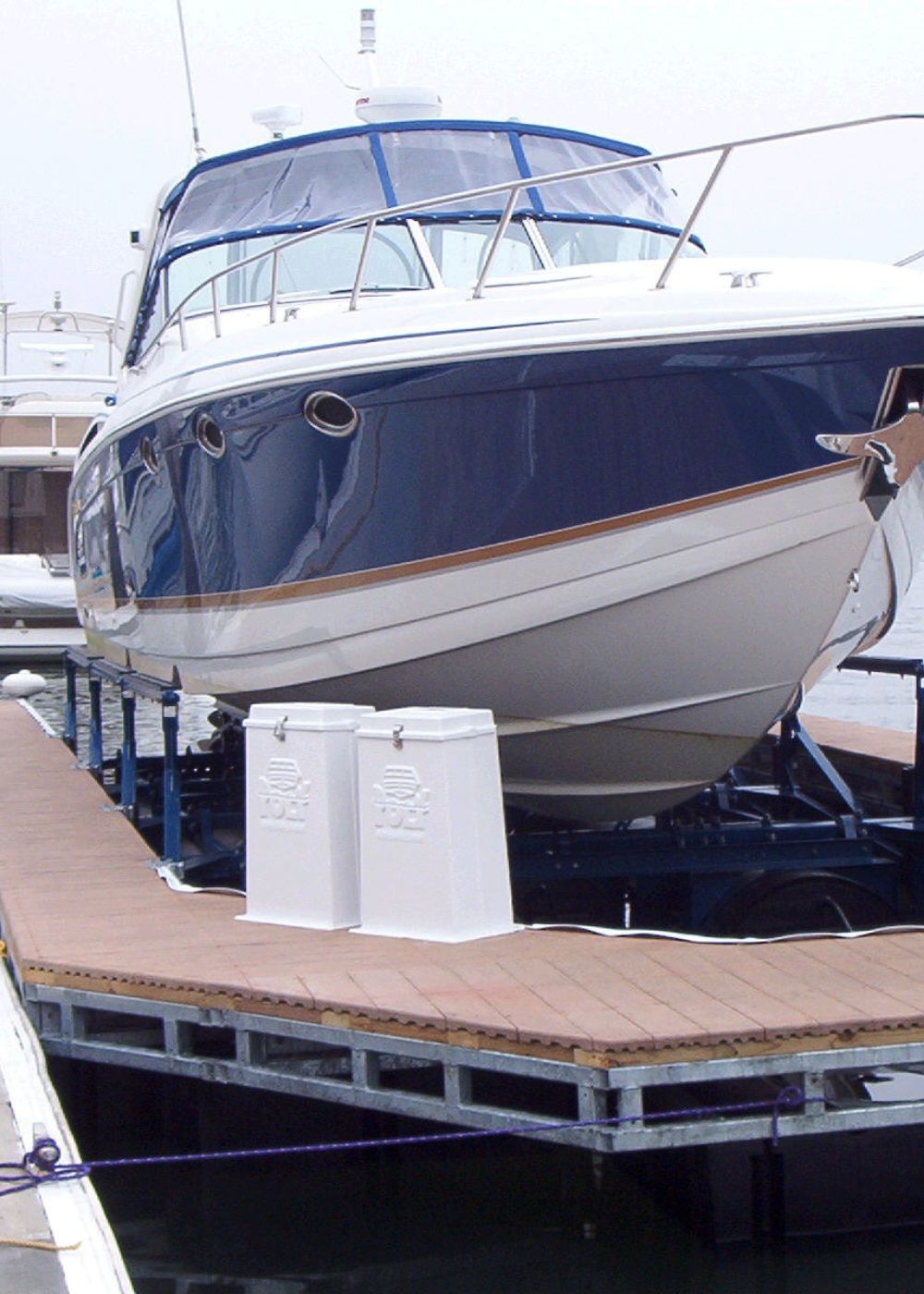
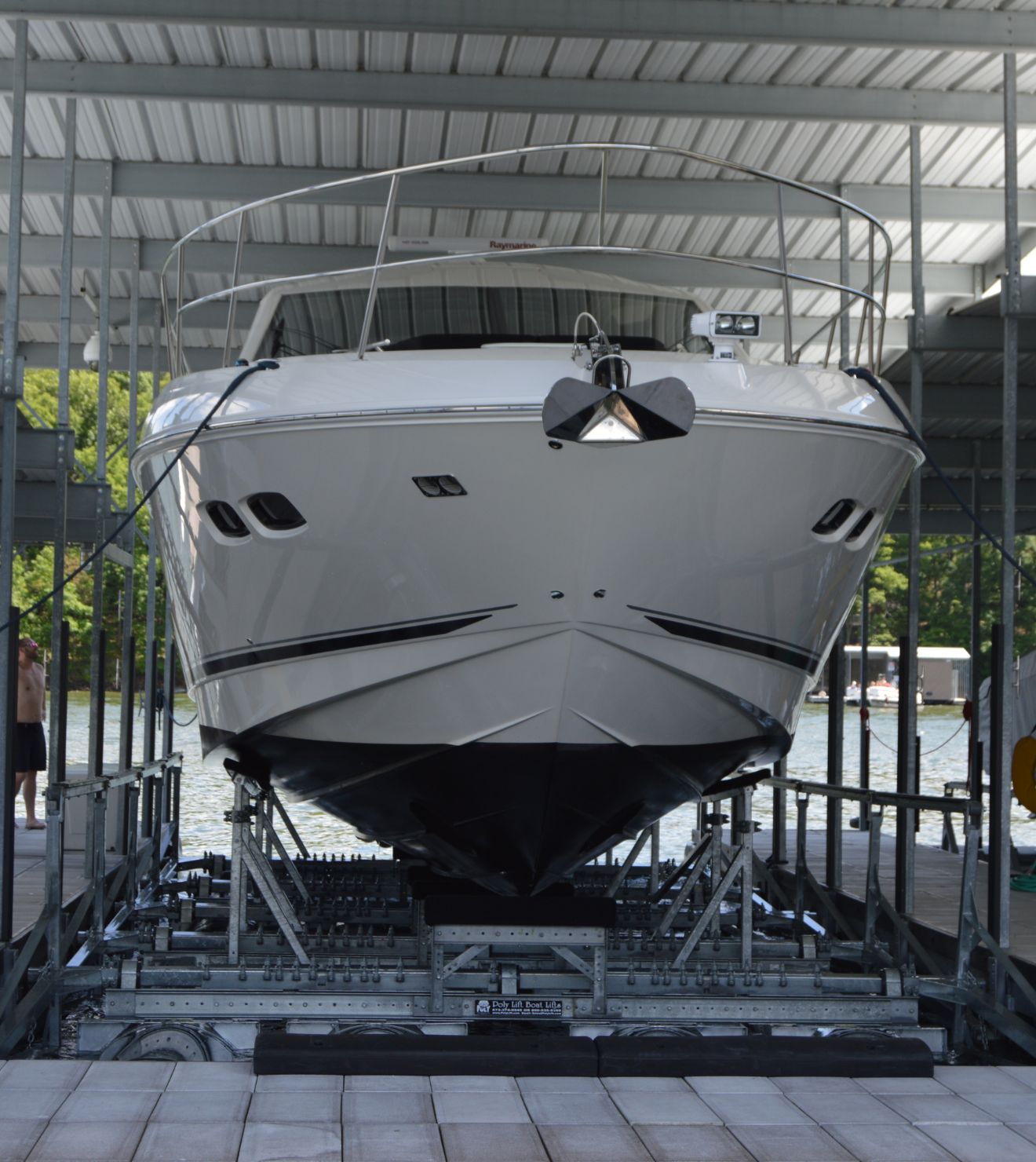
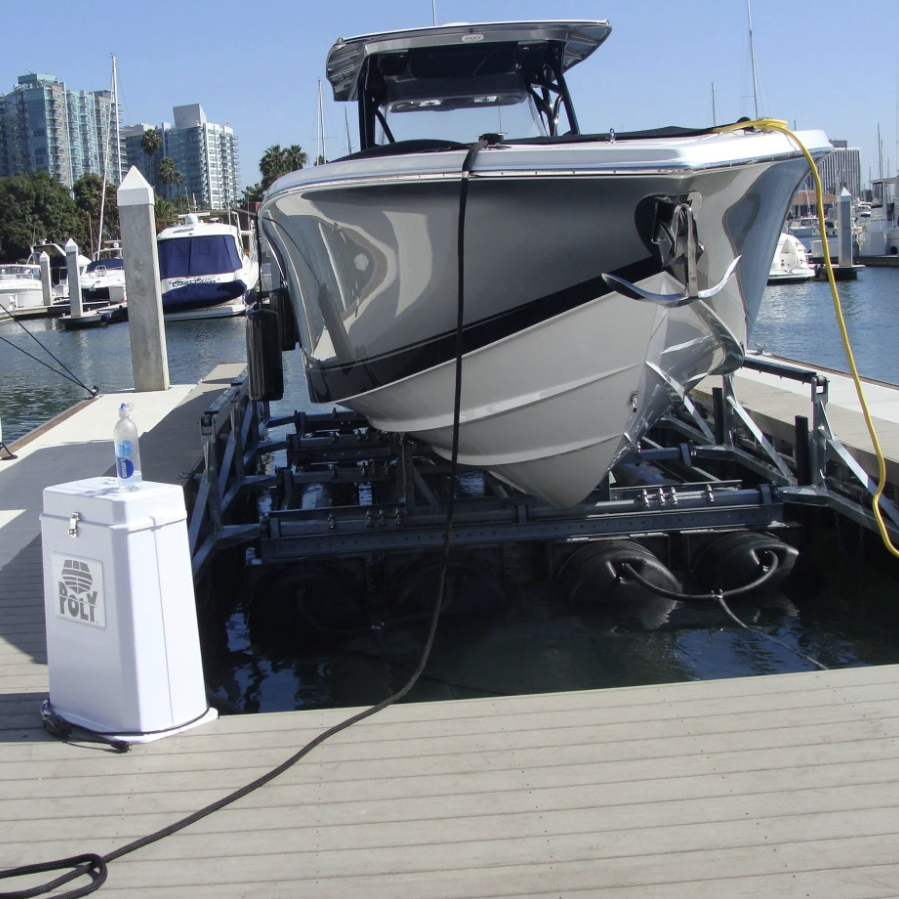
Wake boats need even, stable hull support. The bunks or cradle should be positioned to match the hull shape and support the boat along appropriate structural areas.
This is especially important for boats with deep V-hulls, stepped hulls, or specialized running surfaces. A wake boat should sit securely on the lift without rocking, leaning, or resting on underwater hardware.
Proper support also makes everyday operation easier. A well-set-up lift helps the boat load smoothly, center more predictably, and stay more stable in the slip.
Clearance for Running Gear
Inboard wake boats have important components underneath the hull. These may include the propeller, shaft, rudder, tracking fins, surf tabs, trim plates, and other hardware.
The lift should provide enough clearance so these components are protected. That means the bunks should be placed correctly, the lift should be configured properly, and the boat should not sit in a way that puts pressure on underwater gear.
This is one of the reasons wake boat owners should avoid generic lift setups that are not adjusted for the boat’s actual hull and running gear.
Stability in Wind, Waves, and Busy Water
Wake boats are often used on busy lakes. Weekend traffic, wind, wave action, and movement inside a slip can all put stress on a boat that is left floating in the water.
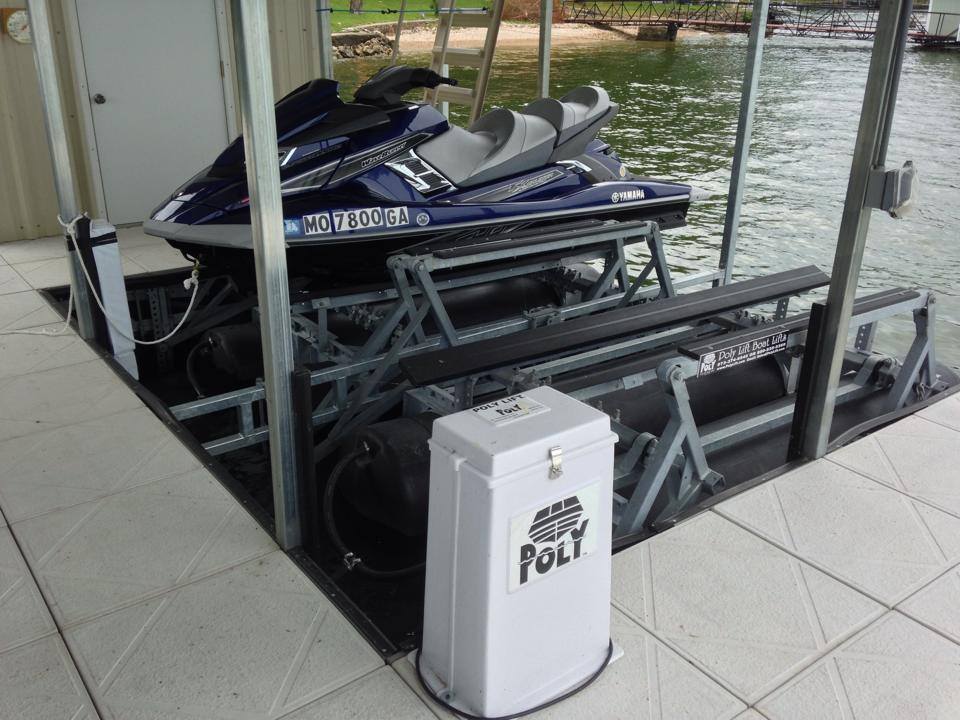
A lift helps reduce that exposure by raising the boat out of the water and keeping it more secure in its dock space. Roto Lift® Boat Lifts, for example, are designed to raise boats above the elements and help protect them from wind and wave action.
This kind of protection matters for wake boats because they are often high-value boats with premium finishes, electronics, audio systems, and specialized components.
Durable Components
Wake boats are not small investments. The lift holding one should be built for long-term use.
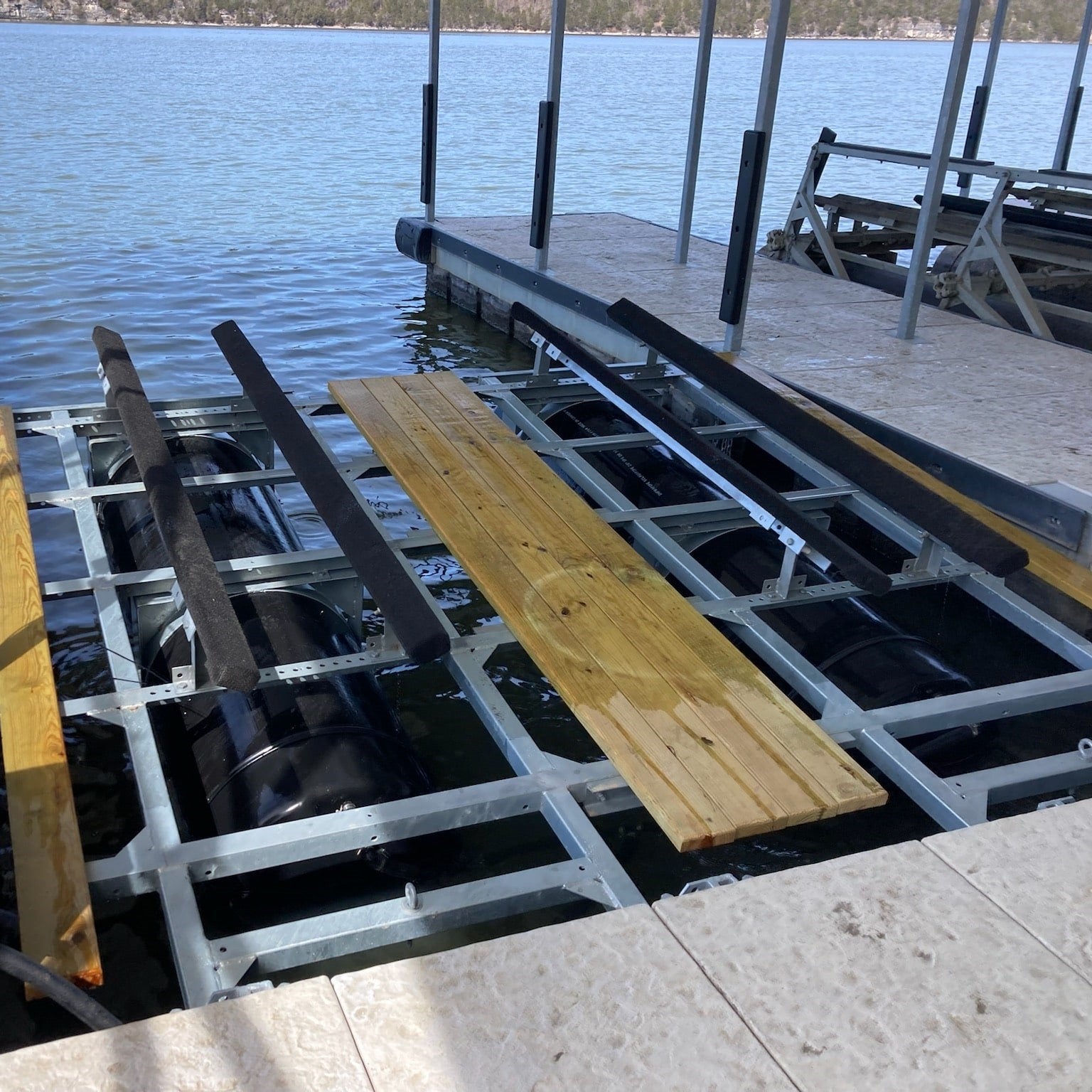
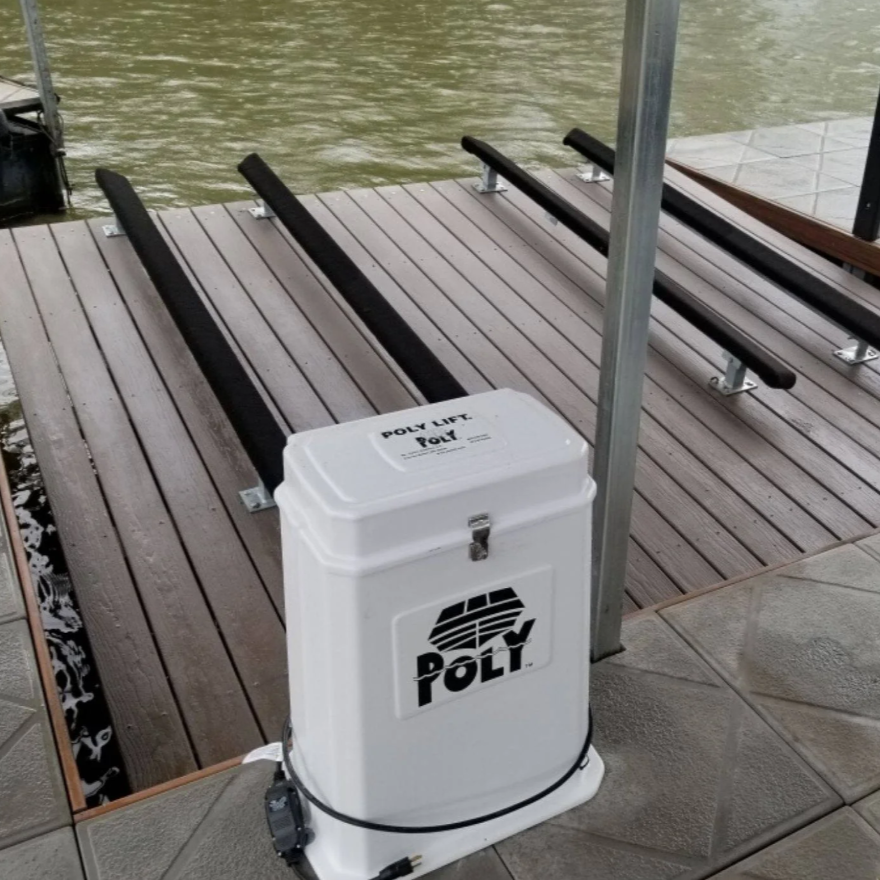
Durability matters in the frame, tanks, hardware, controls, and overall design. At Poly Lift Boat Lifts, our Poly Lift® Boat Lifts are known for top-notch build quality, patented designs, and virtually indestructible polyethylene tanks. Our tanks also feature a lifetime warranty.
For wake boat owners, that kind of long-term thinking is important. A lift is not just an accessory. It is part of how the boat is protected season after season.
Easy, Dependable Operation
A good wake boat lift should make boating simpler, not more frustrating.
Owners should be able to launch, load, and store their boat without fighting the lift every time. The lift should feel stable and predictable. It should be easy enough to use that the boat actually gets lifted after a long day on the water.
That last point matters. If a lift is awkward, slow, or poorly matched to the boat, owners are more likely to leave the boat in the water. That defeats the purpose of having a lift in the first place.
What Size Boat Lift Do You Need for a Wake Boat?
There is no single lift size that works for every wake boat. The right size depends on the exact boat and how it is stored.
Here is the general process.
Start With the Boat’s Dry Weight
First, find the manufacturer’s listed dry weight. This information is usually available in the owner’s manual, manufacturer specifications, or through the boat dealer.
Dry weight is helpful, but it is not enough on its own.
A wake boat with a listed dry weight of 5,500 pounds may weigh far more once fuel, batteries, audio equipment, gear, and accessories are added.
Add Fuel, Batteries, and Gear
Next, estimate what is usually on the boat when it is stored.
Common weight additions include:
- Fuel
- Extra batteries
- Tower speakers
- Wakeboards and surfboards
- Ropes and life jackets
- Anchors and dock lines
- Coolers
- Tools and safety gear
- Aftermarket accessories
Many boat owners underestimate this category. The safest approach is to be honest about how the boat is actually used.
Account for Ballast the Right Way
Ballast should generally be drained before lifting the boat. Still, ballast capacity should be part of the conversation because it tells you something about the boat’s design, use, and possible load scenarios.
A wake boat with large ballast capacity is built around heavy load changes. That does not mean the lift should be used to store the boat full of ballast. It does mean the lift should be selected with an understanding of the boat’s real operating environment.
Always follow the boat manufacturer’s guidance and the lift manufacturer’s recommendations.
Build in a Safety Margin
A safety margin gives the lift room to work without constantly operating at its upper limit.
This is especially important if the owner may upgrade equipment, add accessories, or move into a larger boat later. Wake boat owners often add tower accessories, audio systems, and extra gear over time.
Choosing a lift with a little more capacity than the bare minimum can be a smart long-term decision.
Ask a Specialist Before Guessing
Wake boats are too expensive to size by guesswork. Before choosing a lift, gather the boat make, model, year, dry weight, beam, length, draft, hull shape, ballast capacity, and dock measurements.
Then talk with a lift specialist.
At Poly Lift Boat Lifts, we offer standard lift models, front mount lift options, Roto Lift® Boat Lifts, Poly Dock® walkways, and custom solutions. If you are unsure what your wake boat needs, the easiest next step is to request a quote and let our team review the details.
Best Types of Boat Lifts for Wake Boats
Different docks, slips, and water conditions may call for different lift styles. The best choice depends on the boat and the location.
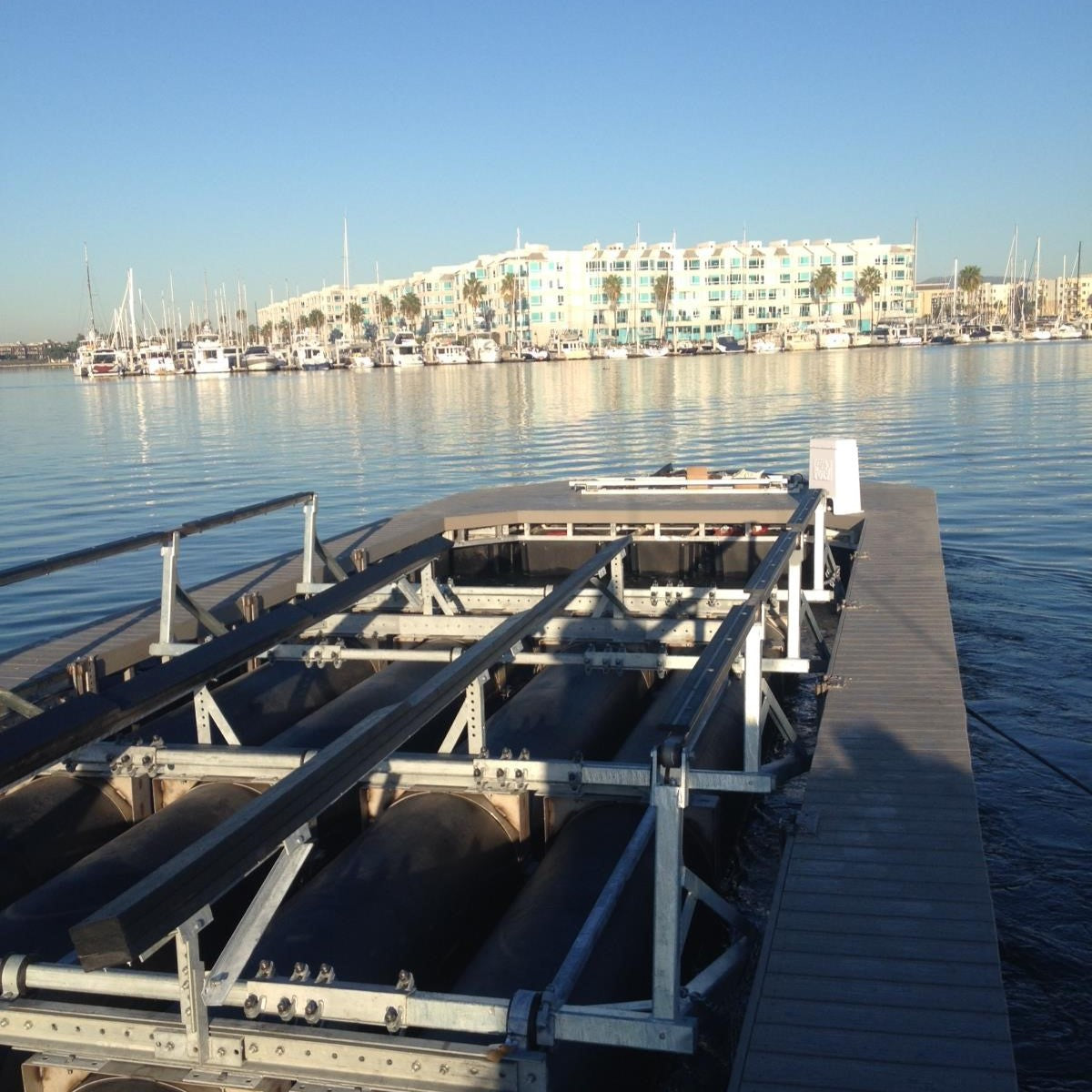
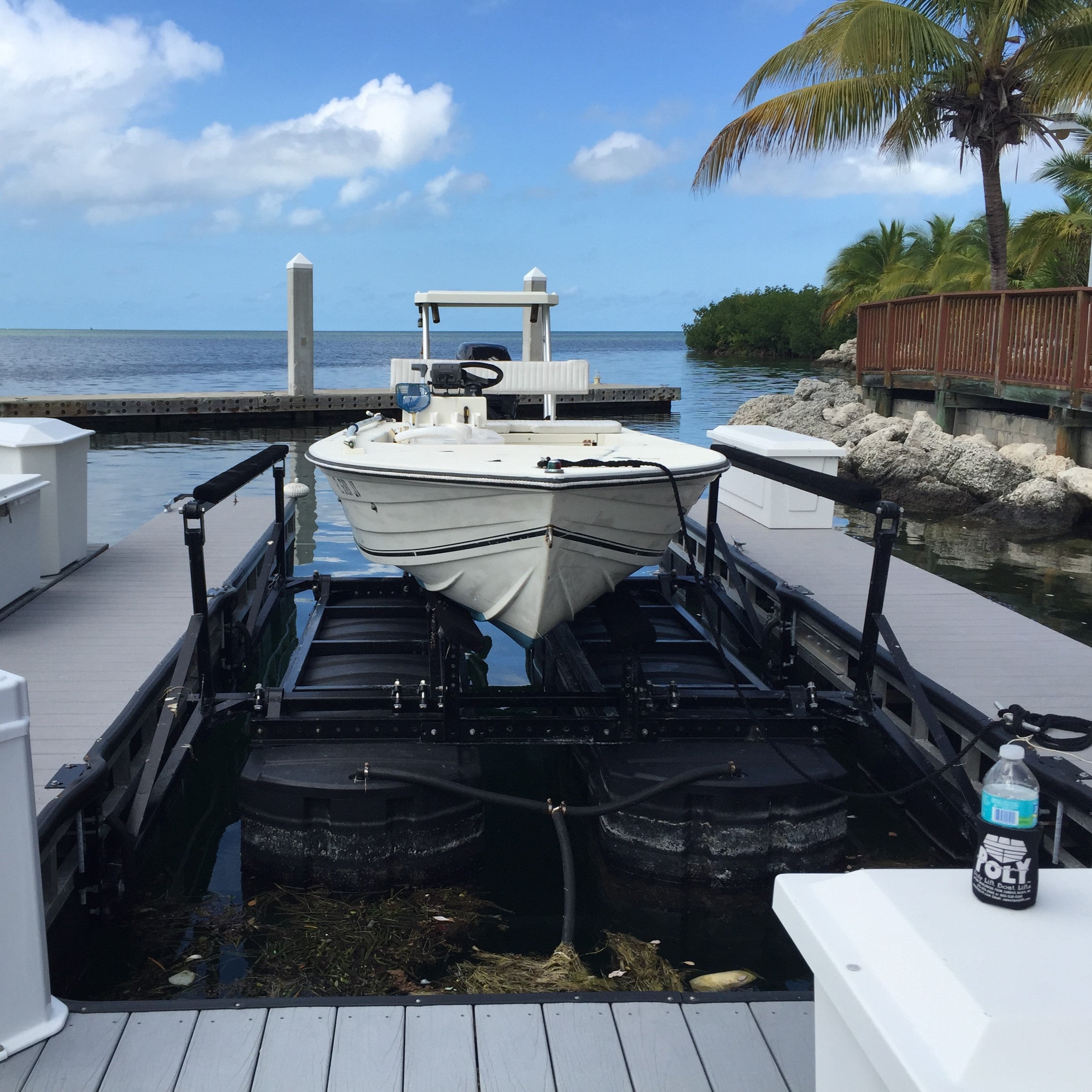
Floating Tank-Style Boat Lifts
Floating tank-style lifts can be a strong option for many wake boat owners, especially in areas where water levels fluctuate or dock layouts vary.
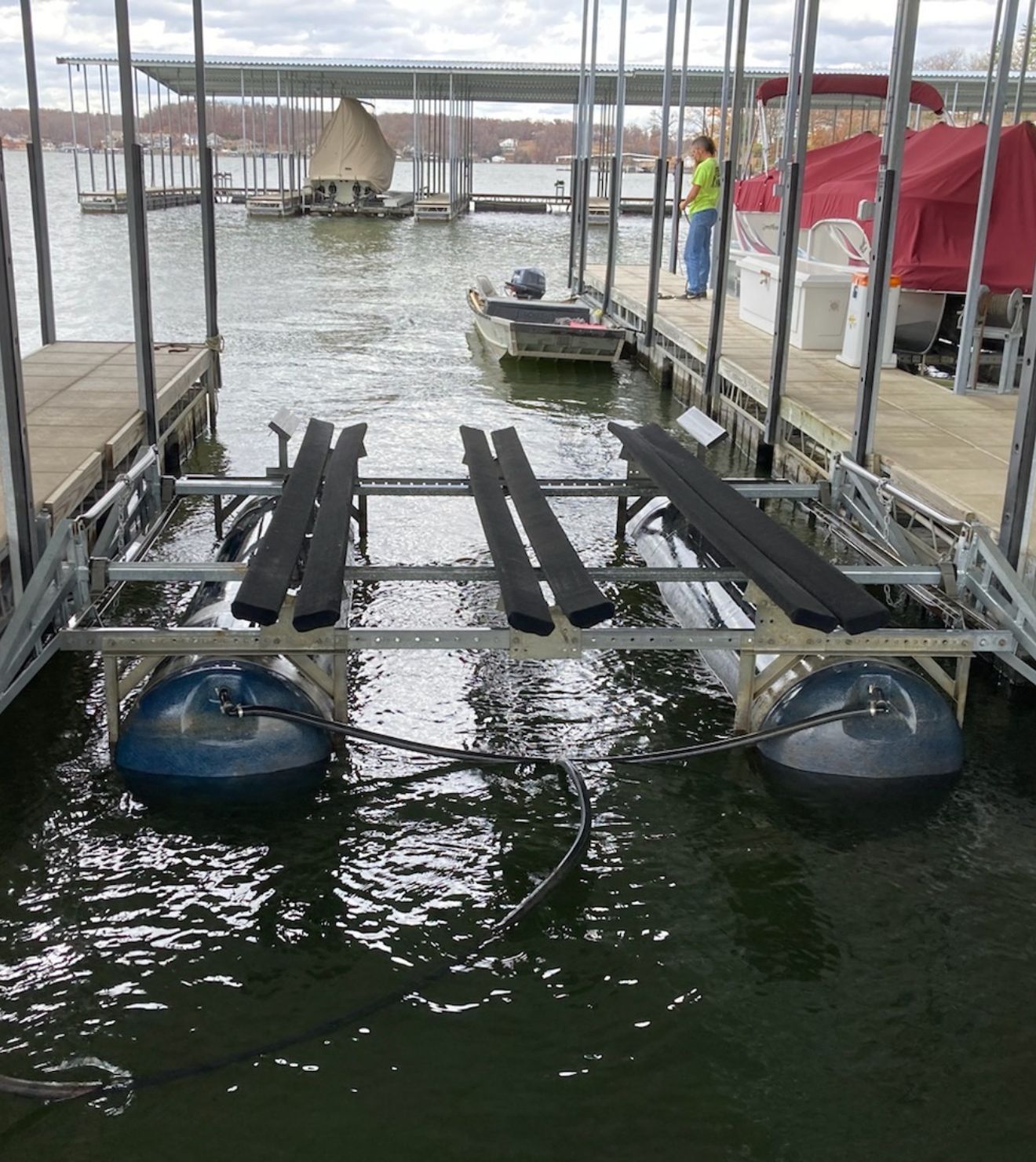
These lifts use tanks to raise and lower the boat. For larger wake boats, the advantage is that the lift can be configured around the boat’s size, hull, and slip conditions.
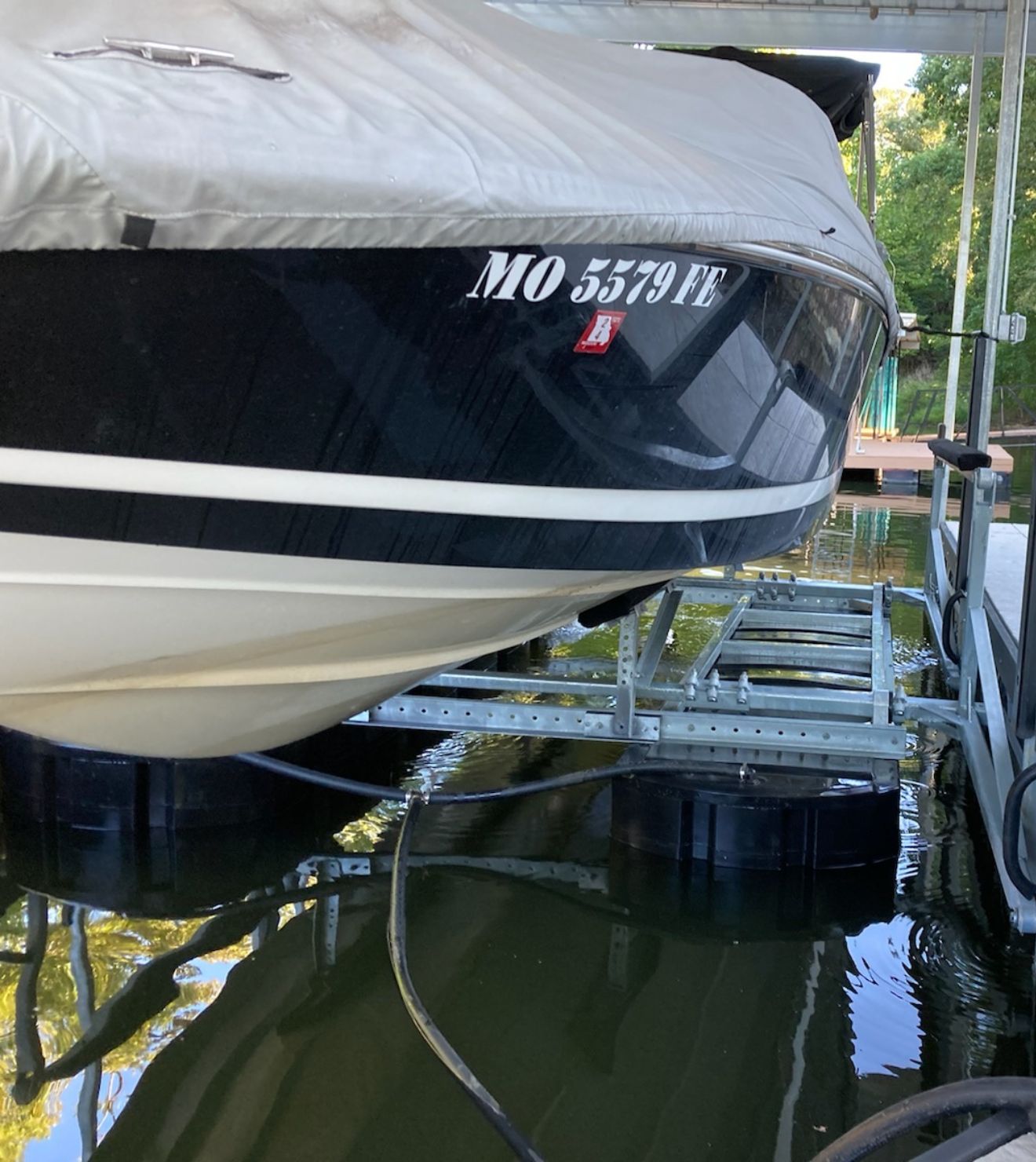
Poly Lift® Boat Lifts are known for their polyethylene tanks and durable design. For a heavy, high-value wake boat, that combination of strength and protection can be important.
Custom Boat Lifts
A custom lift may be the best option when the wake boat has unique requirements.
This can include:
- A specialized hull shape
- Unusual dock dimensions
- Shallow or changing water depth
- Clearance concerns
- Larger boat size
- Specific boarding or walkway needs
- Special storage preferences
Poly Lift Boat Lifts can create custom solutions when a standard setup is not the right fit. For wake boat owners, this can be especially useful because the boat’s weight, hull, and running gear need to be considered together.
A custom lift is not always necessary, but when it is, it can make the lift safer, easier to use, and better suited to the boat.
Front Mount Lifts
Front mount lifts can be useful in certain dock and slip layouts. They may be a good fit when the dock structure or space limitations make a traditional setup less practical.
Poly Lift Boat Lifts lists front mount lift options, including larger options such as 18PL and 30PL. Since the right fit depends on the boat and dock, wake boat owners should call or request a quote before deciding which model makes sense.
Lifts With Walkaround Access
Wake boats are gear-heavy boats. Owners are often loading boards, ropes, towels, coolers, life jackets, and passengers. They are also cleaning the boat, covering it, wiping down the hull, and checking equipment.
Walkaround access can make all of that much easier.
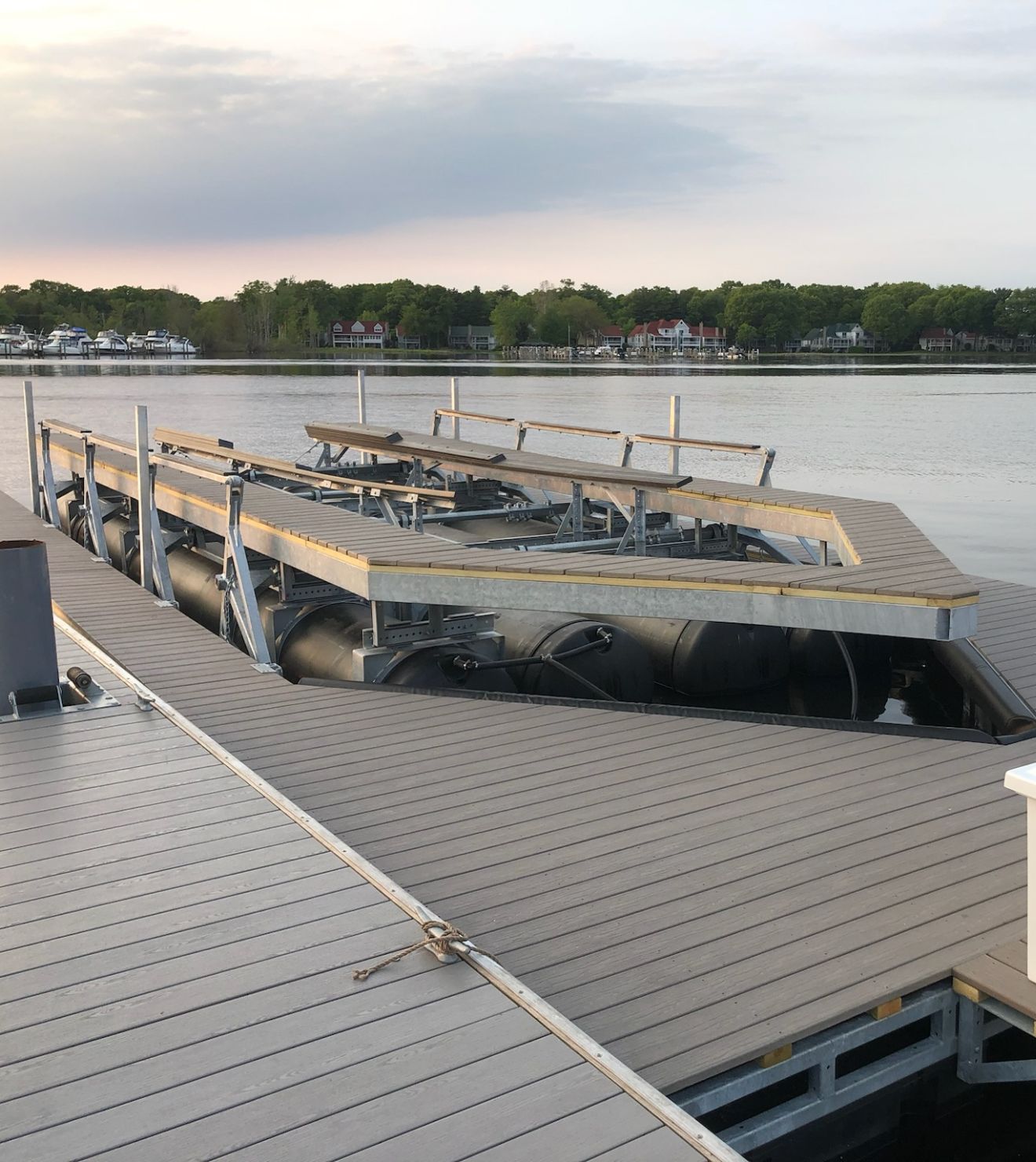
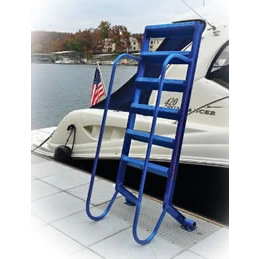
Poly Dock® wraparound walkways can be used with Poly Lift® and Roto Lift® boat lifts to create a sturdy, safe walking surface around the boat. For wake boat owners, that can be more than a convenience. It can make everyday use safer and more comfortable.
Why Leaving a Wake Boat in the Water Can Be Expensive
A wake boat is designed to be in the water while you are using it. That does not mean it should sit in the water all season if you can avoid it.
Keeping a wake boat lifted can help reduce several common maintenance issues.
Hull Stains and Marine Growth
When a boat sits in the water, the hull is exposed to staining, algae, zebra mussels, and other marine growth. Over time, that can affect the boat’s appearance and increase cleaning time.
Wake boats often have premium gelcoat finishes and carefully maintained hulls. Keeping the boat out of the water when it is not being used helps preserve that finish.
Corrosion and Driveline Issues
Water exposure can contribute to corrosion and wear on metal components, driveline parts, and underwater hardware.
Poly Lift® Boat Lifts help minimize maintenance headaches such as driveline corrosion and electrolysis damage. For wake boat owners, this is especially important because the running gear underneath the boat is a critical part of performance.
Bottom Painting and Extra Maintenance
A boat lift can reduce or eliminate the need for expensive bottom painting in many situations. That is one reason many boat owners view a lift as a long-term maintenance investment, not just a dock accessory.
A wake boat owner typically wants more time riding and less time scrubbing, repairing, and maintaining. A properly selected lift helps support that goal.
Resale Value Protection
Wake boats hold value best when they are clean, well maintained, and protected from avoidable wear.
A lift can help protect the hull, reduce water exposure, limit marine growth, and make cleaning easier. Over time, that can support better appearance and stronger resale value.
For many owners, the lift is part of the boat’s protection plan.
Wake Boat Lift Mistakes to Avoid
Choosing the wrong lift can create problems that are expensive and frustrating. Here are a few mistakes to avoid.
Choosing Based on Dry Weight Alone
This is one of the most common mistakes. Dry weight does not tell the whole story.
A wake boat’s real-world storage weight can include fuel, batteries, gear, accessories, tower equipment, and more. Always size the lift based on realistic weight, not just the lowest number available.
Ignoring Ballast Systems
Ballast should usually be empty before lifting, but it still matters. Wake boats are designed around added weight, and the lift conversation should include how the boat is used.
Do not ignore ballast capacity when discussing the boat with a lift specialist.
Buying Too Small to Save Money
A smaller lift may cost less upfront, but undersizing can create long-term problems. It can add strain to the lift, reduce stability, and leave little room for accessories or future upgrades.
With a wake boat, it is better to choose the right lift once than to fight the wrong lift every season.
Not Checking Hull and Bunk Fit
Capacity does not matter much if the boat is not supported correctly.
Wake boats need proper bunk placement and running gear clearance. The hull should sit securely on the lift without resting on fins, props, rudders, or surf hardware.
Forgetting About Tower Height and Slip Clearance
Wake boats often have towers, bimini tops, board racks, speakers, and lights. These can affect canopy clearance, slip clearance, and overall storage setup.
When planning a lift, consider the full profile of the boat, not just the hull length.
Not Planning for Future Upgrades
Wake boat owners often upgrade. They may add a better sound system, extra batteries, more gear, or eventually move to a larger boat.
If future flexibility matters, bring that up during the quote process. It may influence the lift capacity or configuration that makes the most sense.
How Poly Lift Boat Lifts Fits Wake Boat Owners’ Needs
Wake boats need careful lift planning. That is where experience matters.
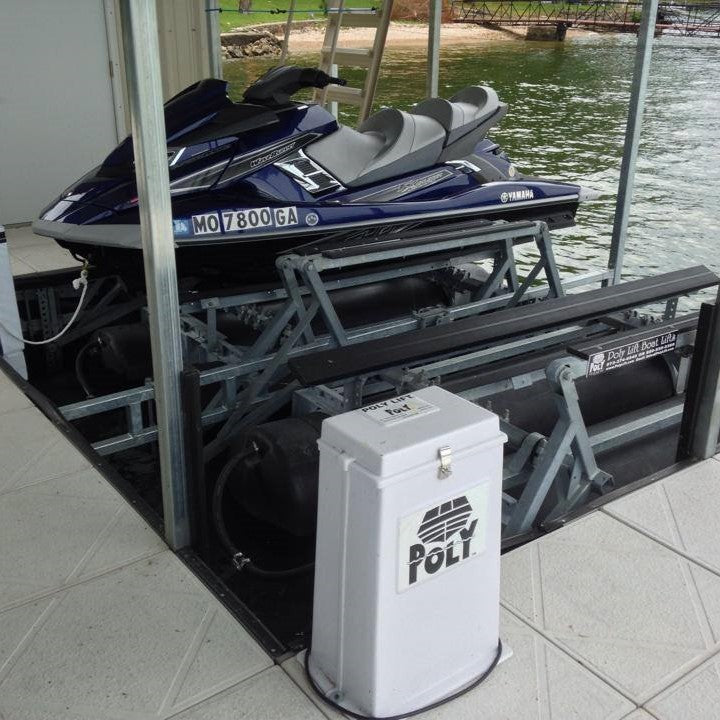
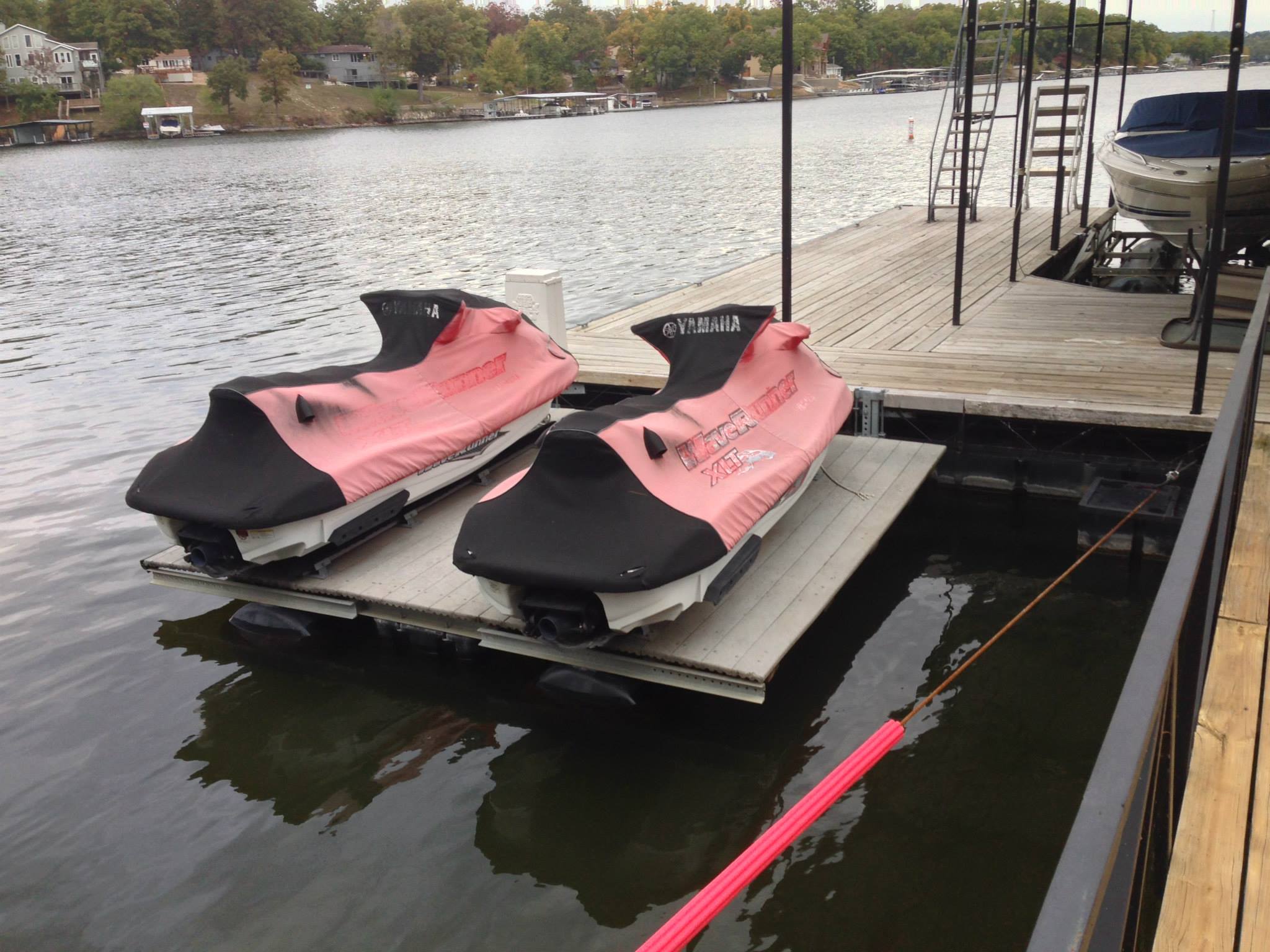
Poly Lift Boat Lifts has been specializing in boat lifts since 1975, and our product lineup includes Poly Lift® Boat Lifts, Roto Lift® Boat Lifts, Poly Dock® walkways, standard lifts, front mount lifts, PWC lifts, and custom boat lift solutions.
For wake boat owners, a few things stand out.
Experience Since 1975
Boat lifts are not a side project for us. They are what we do.
With over 50 years of experience building boat lifts, Poly Lift Boat Lifts understands how different boats, docks, and water conditions affect the right lift choice. That matters when dealing with heavy, specialized boats like wake boats.
Built for Protection
Poly Lift® Boat Lifts are designed to help protect watercraft from the elements and movement in the slip. They also help reduce maintenance issues such as hull stains, blistering, corrosion, electrolysis damage, marine growth, and bottom painting.
For a wake boat, that protection can make a meaningful difference over the life of the boat.
Customizable for Different Hull Types
Poly Lift® Boat Lifts can be customized to fit hull types such as v-hull, step hull, pontoon, tritoon, and catamaran.
Wake boats often have specialized hulls and underwater components, so customization is important. The goal is not just to lift the boat. The goal is to support it correctly.
Polyethylene Tanks and Long-Term Durability
Poly Lift® Boat Lifts are known for patented designs, strong construction, and virtually indestructible polyethylene tanks. Our tanks feature a lifetime warranty.
For wake boat owners, that level of durability is worth considering. A heavy boat needs a lift that is built for repeated use, season after season.
Standard and Larger Lift Options
Poly Lift Boat Lifts offers multiple standard lift options, including models such as 2PL, 4PL, 6PL, 6PL SW, 8PL, 10PL, 12PL, and 15PL. We also list front mount lift options including 18PL and 30PL.
The right model depends on the specific boat and dock setup. That is why it is best to request a quote rather than trying to choose a lift from model names alone.
Wraparound Walkway Options
Poly Dock® wraparound walkways can be paired with Poly Lift® and Roto Lift® boat lifts to provide a sturdy, safe walking surface around the boat.
For wake boat owners, this can be especially useful. Wake boats involve more boarding, loading, cleaning, wiping down, covering, and gear handling than many other boats. A walkway can make those tasks easier and safer.
What Information Should You Have Before Requesting a Wake Boat Lift Quote?
Before requesting a quote, gather as much information as possible. This helps our team recommend the right lift more accurately.
Helpful information includes:
- Boat make, model, and year
- Dry weight
- Ballast capacity
- Fuel capacity
- Beam
- Length
- Draft
- Hull shape
- Dock type
- Slip width and depth
- Water level changes
- Tower height
- Canopy clearance
- Typical gear stored on board
- Whether you want walkway access
Do not worry if you do not have every detail. Our team can help walk through the important questions.
The more information we have, the better we can match the lift to your wake boat.
Example Wake Boat Lift Sizing Scenario
Here is a simple example of how wake boat lift sizing should be approached.
Let’s say a wake boat has a dry weight of 5,800 pounds. That number is only the starting point.
Now add a full fuel tank, batteries, tower speakers, boards, anchors, ropes, safety gear, and other stored equipment. The practical storage weight may be significantly higher.
Then consider ballast. The boat should generally be lifted with ballast drained, but ballast capacity still needs to be discussed because it is part of the boat’s design and usage profile.
Finally, add a safety margin. You do not want a lift that is barely strong enough on paper. You want a lift that can handle the boat comfortably in the real world.
This is why one wake boat may need a different lift than another boat of similar length. Weight, hull design, gear, and dock conditions all matter.
Is a Custom Lift Worth It for a Wake Boat?
In many cases, yes.
A custom lift may cost more upfront than a basic, generic setup. However, wake boats are expensive, heavy, and highly specialized. A lift that fits correctly can make launching easier, loading smoother, storage safer, and maintenance simpler.
A custom solution may be worth considering if:
- Your wake boat is especially heavy
- Your hull shape is unusual
- Your dock or slip has space limitations
- Your water depth changes
- You need special clearance
- You want wraparound walkway access
- You plan to keep the boat for many years
At Poly Lift Boat Lifts, we can create custom solutions when standard options are not the right fit. For wake boat owners, that flexibility can be a major advantage.
Frequently Asked Questions About Wake Boat Lifts
Can I Put a Wake Boat on a Regular Boat Lift?
Sometimes, but only if the lift has the correct capacity, hull support, clearance, and configuration.
A regular lift that works for a lighter boat may not be appropriate for a wake boat. Always check the real-world weight and hull fit before using an existing lift.
Should Ballast Be Empty Before Lifting a Wake Boat?
In most cases, yes. Ballast should generally be drained before lifting or storing the boat.
Always follow your boat manufacturer’s instructions and your lift manufacturer’s guidance. If you are unsure, ask before lifting.
How Much Capacity Should a Wake Boat Lift Have?
The lift should handle the boat’s realistic loaded storage weight with a safety margin.
Do not rely on dry weight alone. Include fuel, batteries, accessories, gear, and any other items typically stored on the boat.
Do Wake Boats Need Special Bunks?
Many wake boats benefit from carefully positioned bunks because of hull shape and underwater hardware.
The bunks should support the hull properly while protecting props, shafts, rudders, fins, and surf systems.
Are Floating Boat Lifts Good for Wake Boats?
They can be, when properly sized and configured.
A floating tank-style lift can work well for many wake boats, especially when water levels or dock conditions make flexibility important. The key is choosing the right capacity and setup.
What Makes Poly Lift Boat Lifts a Good Fit for Wake Boat Owners?
Poly Lift Boat Lifts offers experience, custom lift options, polyethylene tanks, standard and larger lift models, Roto Lift® Boat Lifts, front mount lifts, and Poly Dock® wraparound walkways.
For wake boat owners, the biggest advantage is that we can help match the lift to the boat, dock, and water conditions rather than forcing a one-size-fits-all setup.
Final Answer: The Best Boat Lift for Wake Boats Is the One Built Around Your Boat
The best boat lift for a wake boat is not simply the cheapest lift or the first one that meets the dry weight. It is the lift that fits the boat’s actual weight, supports the hull correctly, protects the running gear, works with the dock, and makes boating easier.
Wake boats deserve careful planning because they are heavy, valuable, and built with specialized equipment. The right lift helps protect the hull, reduce maintenance, simplify storage, and preserve the boat’s long-term value.
If you are trying to choose the best boat lift for your wake boat, start with the numbers, but do not stop there. Think about the full boat, the full dock setup, and the way you actually use the water.
Poly Lift Boat Lifts can help you choose a lift that makes sense for your wake boat, your slip, and your long-term boating plans.
Ready to find the right setup? Request a quote from Poly Lift Boat Lifts and our team can help you get started.