
Best Boat Lift for Fountain Boats: Why Poly Lift Is Built for the Job
Owning a Fountain means you chose performance, precision, and a boat designed to deliver more than an average day on the water. The lift protecting that boat should be selected with the same level of care.
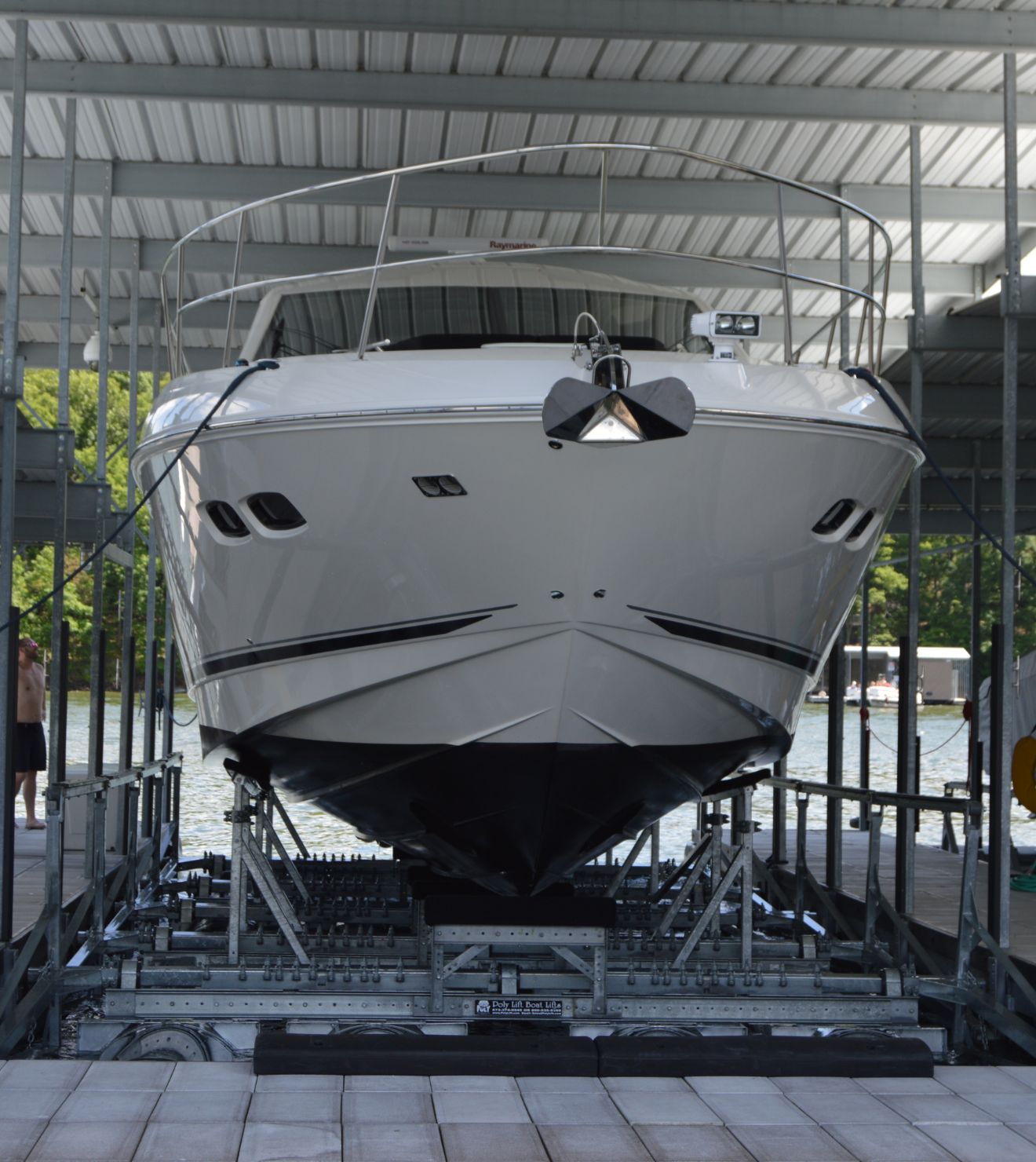
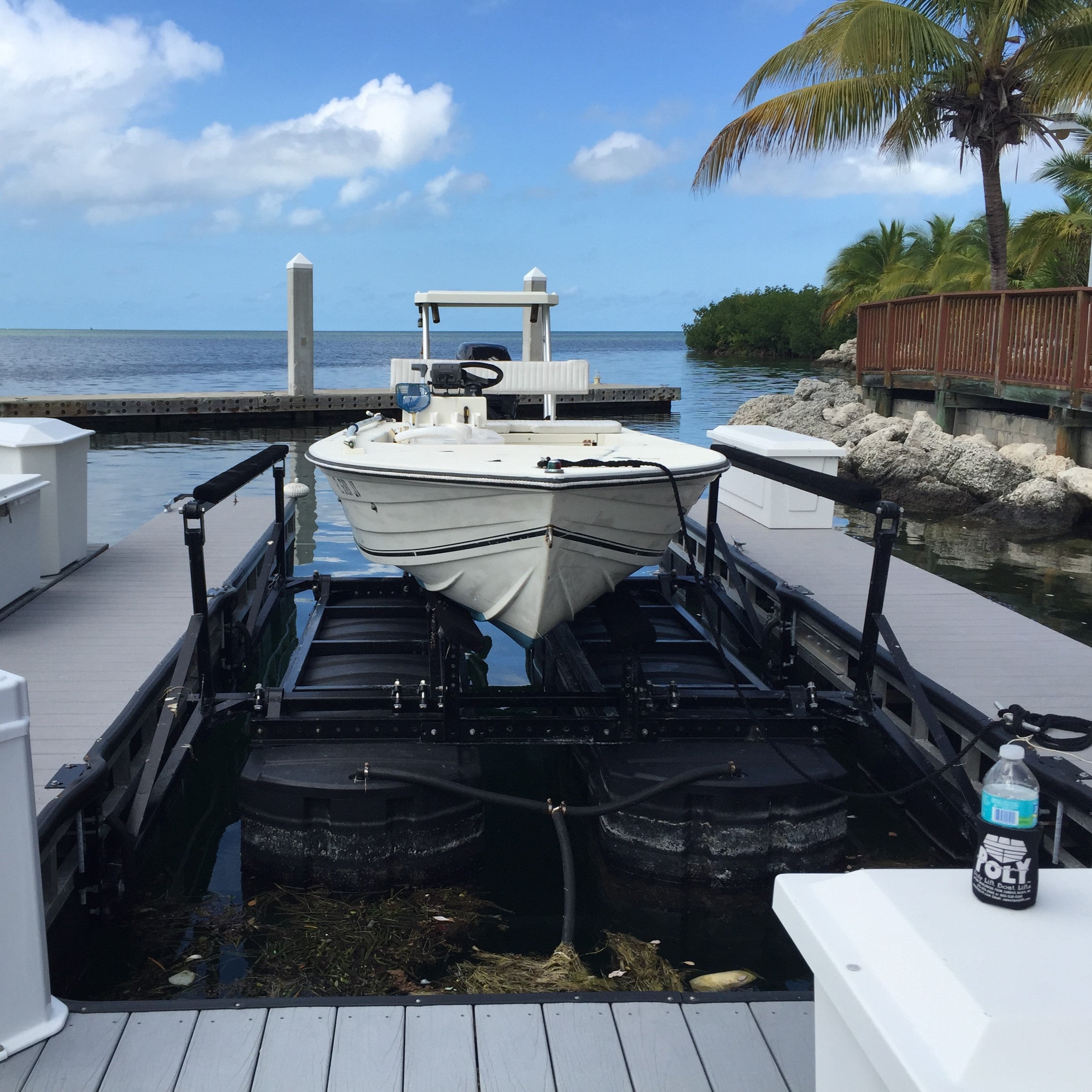
For many Fountain owners, the best boat lift is a custom-configured floating pneumatic lift with enough capacity for the boat's fully loaded weight, support designed around its hull, and a layout that fits the dock and water conditions. That is exactly where Poly Lift® Boat Lifts stand out.
Poly Lift has been building boat lifts since 1975. Our lifts can be customized for V-hull, step-hull, pontoon, tritoon, and catamaran applications, which matters when the boat has performance-oriented hull geometry, substantial engine weight, and valuable running gear to protect.
This guide explains what Fountain owners should look for, how to calculate the right capacity, why hull support matters, and how Poly Lift can build a system around the boat instead of forcing the boat onto a generic lift.
Quick answer: The best boat lift for a Fountain boat is typically a properly sized, custom-fit floating lift that supports the exact hull, keeps the hull and running gear above the water, works with the slip, and remains easy to operate. Poly Lift offers multiple lift sizes, custom fabrication, durable polyethylene flotation tanks, and a team that can match the system to the boat and dock.
Ready to protect your Fountain? Request a quote from Poly Lift Boat Lifts or call (573) 374-6545.

What Makes a Fountain Boat Different to Lift?
A Fountain is not a boat you should match to a lift by length alone. Depending on the model and configuration, the lift may need to account for a step hull, a pronounced V, multiple engines, significant stern weight, a hardtop or tower, and accessories that change the boat's weight and center of gravity.
Before recommending a lift, the Poly Lift team considers the complete setup:
|
What to verify |
Why it matters |
|
Fully loaded weight |
Determines the minimum safe lift capacity |
|
Hull type and support points |
Determines bunk, cradle, and rack configuration |
|
Beam and length |
Determines slip clearance and lift dimensions |
|
Engine configuration |
Affects total weight, center of gravity, and stern support |
|
Draft and running gear |
Determines clearance during loading, launching, and storage |
|
Hardtop, tower, and antennas |
Determines roof and overhead clearance |
|
Dock structure and slip width |
Determines fit, attachment, and access |
|
Water depth and fluctuation |
Determines whether the lift can operate through normal conditions |
|
Wind and wake exposure |
Influences stability, guides, and overall configuration |
The right lift should support the boat securely without creating pressure in the wrong places. It should also make ownership easier: smooth loading, predictable operation, good access around the boat, and less time spent dealing with the effects of in-water storage.
Why a Floating Pneumatic Lift Makes Sense for Many Fountain Boats
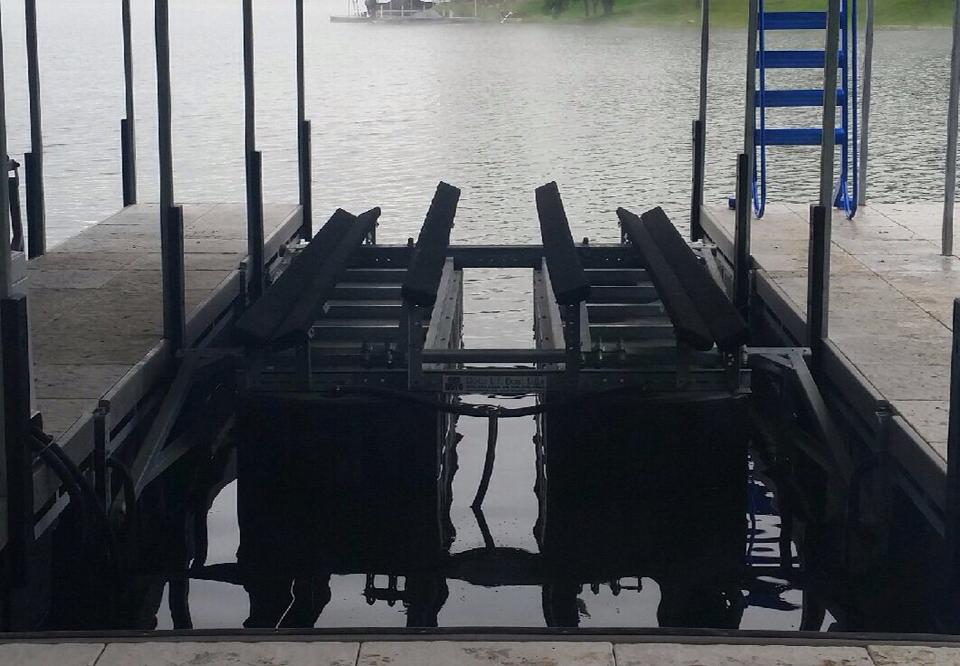
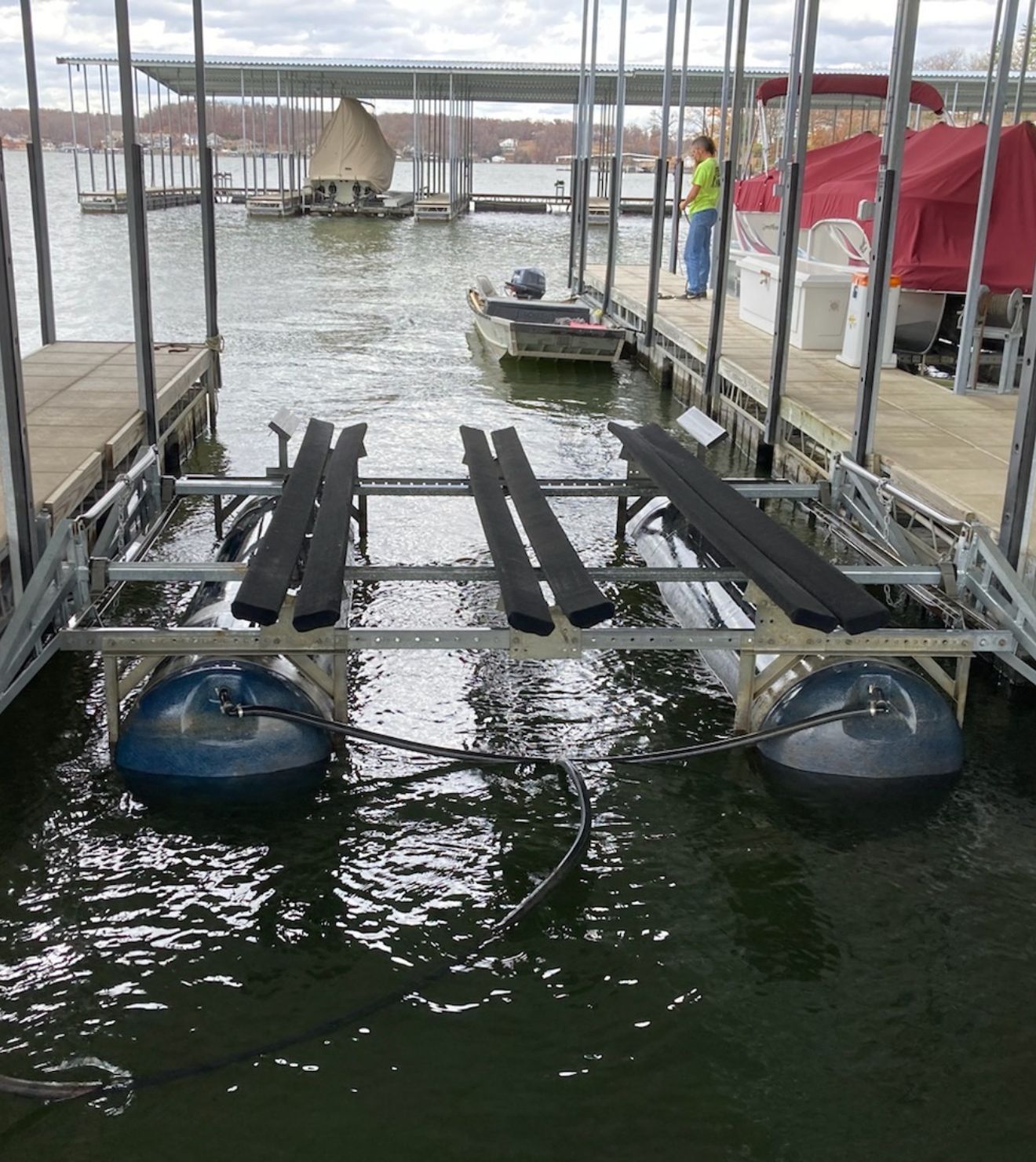
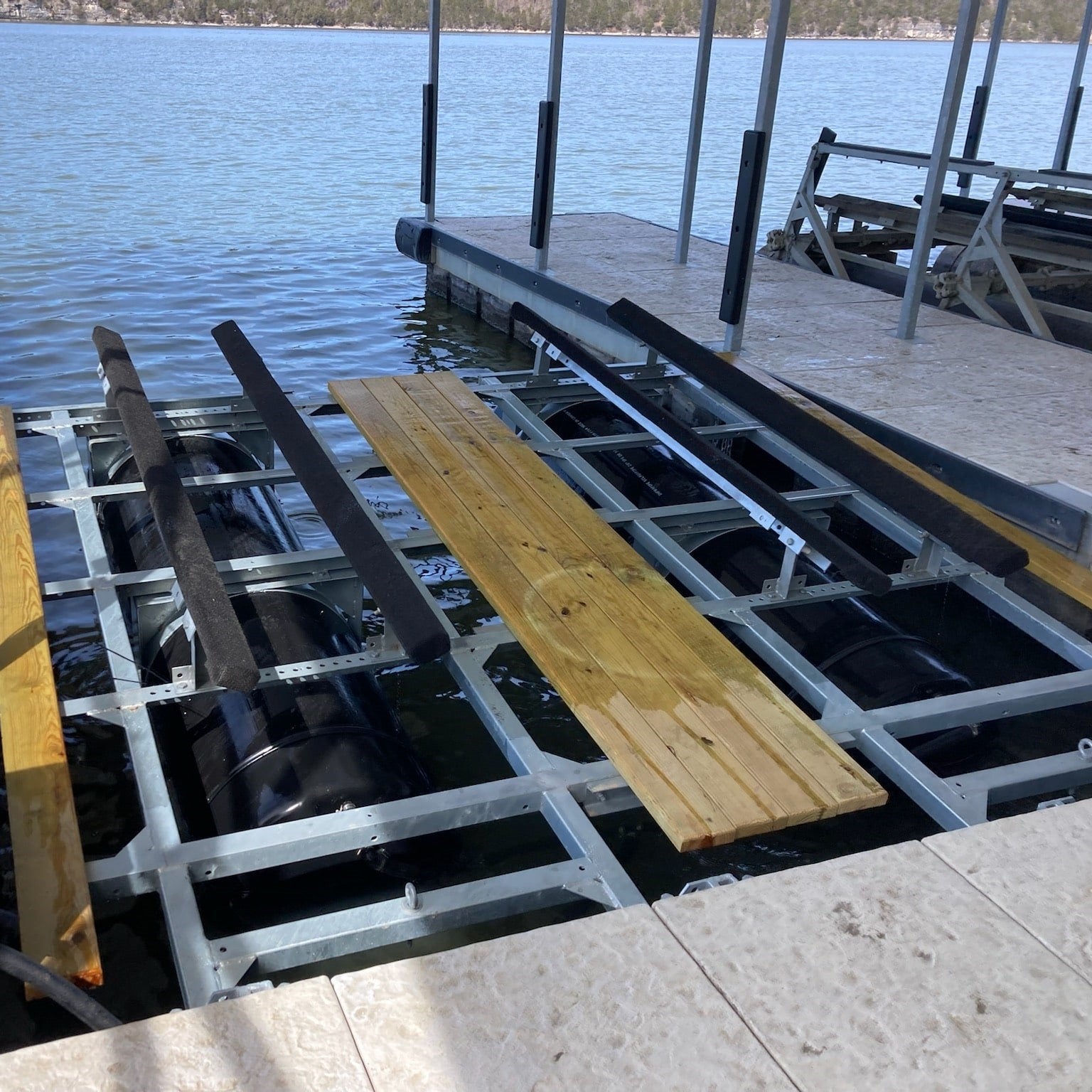
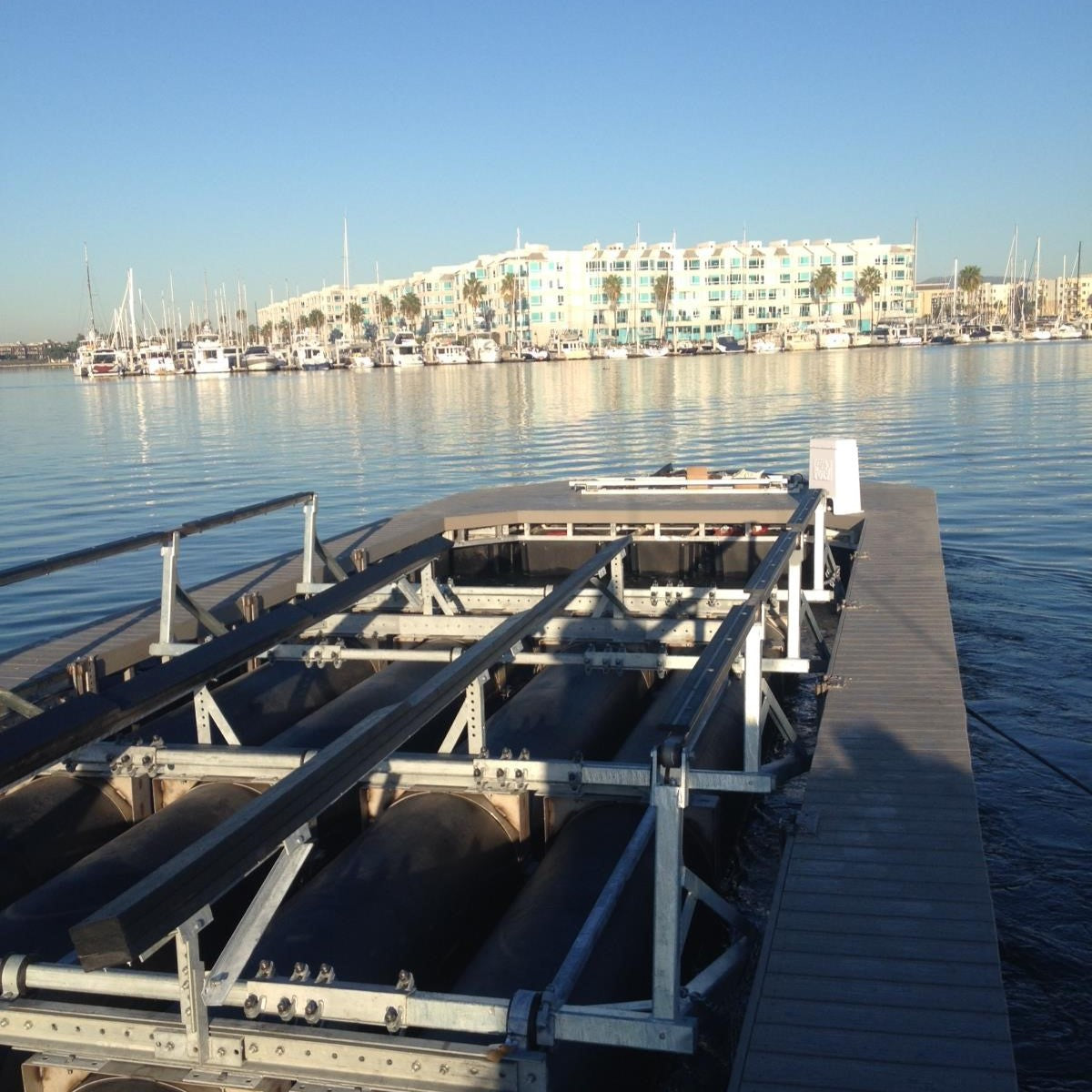
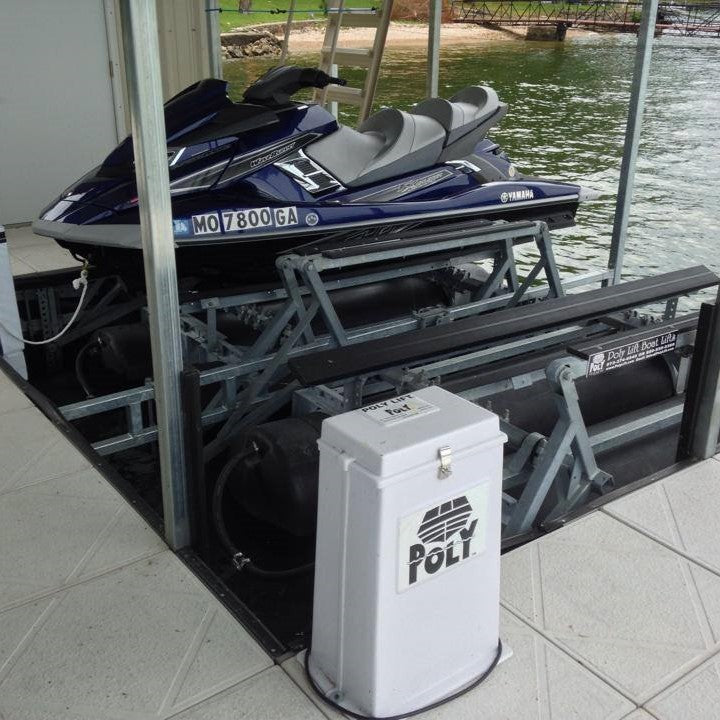
A floating pneumatic lift uses air and polyethylene flotation tanks to raise the boat. To lower the boat, the system allows the tanks to fill with water. To lift it, the control unit blows air into the tanks, displacing the water and creating the buoyancy needed to raise the boat above the surface.
This design offers several advantages for Fountain owners.
It Moves With the Water
A floating lift rises and falls with the dock and water level. That makes it useful on lakes, reservoirs, marinas, and other locations where a bottom-standing lift may be difficult to level or operate consistently.
Changing water levels can create problems for a fixed lift because the boat may sit too high to launch during low water or too close to the surface during high water. A floating system follows the water, helping maintain a more consistent relationship between the lift, dock, and boat.
It Does Not Depend on a Perfect Lake Bottom
Deep water, soft sediment, rock, or an uneven bottom can make a conventional bottom-standing lift impractical. A floating Poly Lift does not rely on four legs planted beneath the boat. Instead, it works within the slip and attaches to the dock system.
This can make it a better fit where the lakebed is too deep, soft, sloped, or irregular for a traditional standing lift.
It Protects the Hull and Running Gear
Leaving a boat in the water for long periods can contribute to hull staining, algae, zebra mussels and other wildlife growth, osmotic blistering, corrosion, and electrolysis damage. Props, drives, trim tabs, and other underwater equipment also remain exposed.
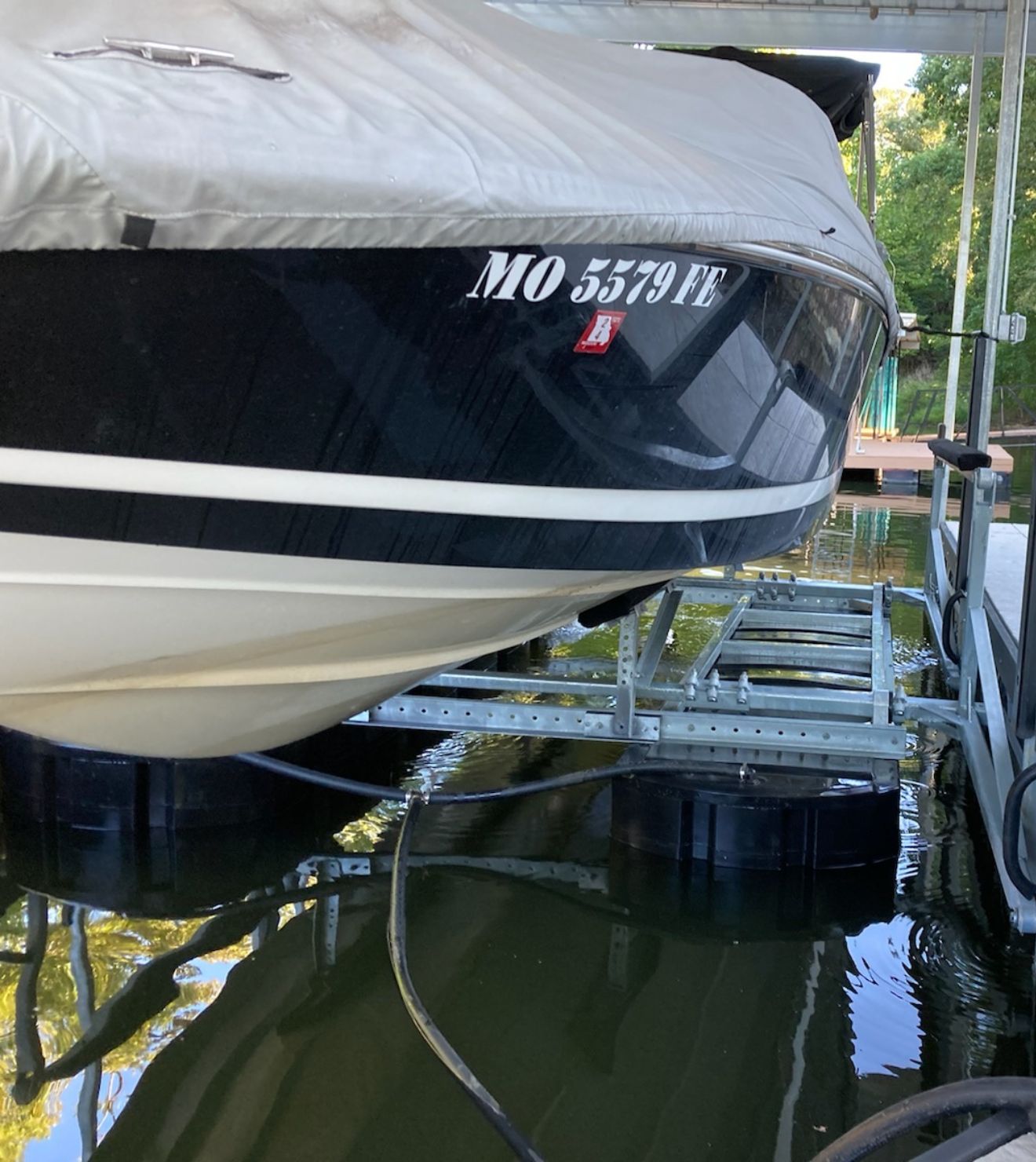
A properly configured Poly Lift raises the hull and running gear out of the water when the boat is not being used. That can reduce cleaning and maintenance while helping protect appearance, performance, and long-term value.
It Can Be Built Around the Boat
A Fountain lift should not be an off-the-shelf frame with the bunks moved until the boat appears to fit. The hull, center of gravity, engines, slip, and access needs should drive the configuration.
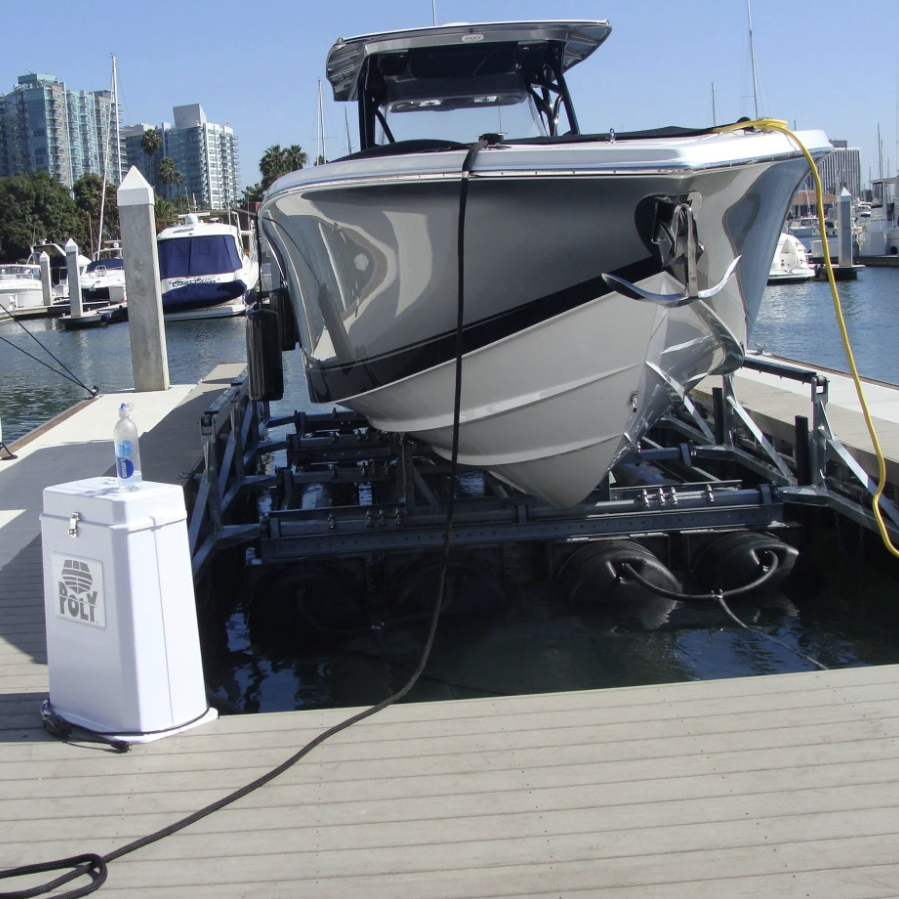
Poly Lift can customize lifts for V-hull and step-hull boats, making it possible to design the support around the Fountain rather than settle for a generic arrangement.
Why Choose Poly Lift for a Fountain Boat?
A high-value performance boat deserves more than the lowest-priced lift that can technically raise it. The better question is which lift will fit correctly, operate dependably, reduce maintenance, and protect the boat over years of ownership.
More Than 50 Years of Boat-Lift Experience
Hydro Systems, Inc., the company behind Poly Lift, entered the boat-lift industry in 1975. The company was founded around the need for a more dependable, hassle-free lift and has continued developing pneumatic boat-lift systems ever since.
Poly Lift is also a company of boaters. That perspective matters because a lift has to work in the real world—after a long day on the water, in a busy slip, during changing lake conditions, and with a boat the owner wants to protect.
Custom Fit for Step Hulls and Performance Boats
Poly Lift systems can be customized for V-hulls, step hulls, pontoons, tritoons, and catamarans. For a Fountain, that customization can address:
-
Hull shape and approved support areas
-
Bunk or rack placement
-
Beam and keel clearance
-
Stern weight and engine configuration
-
Center of gravity
-
Propeller, drive, and trim-tab clearance
-
Walkway and boarding access
-
Slip width and dock attachment
The result is a lift designed around the actual boat and waterfront rather than a one-size-fits-all assumption.
Durable Polyethylene Flotation Tanks
Poly Lift was an early leader in using polyethylene flotation for boat-lift tanks. Poly tanks also reduce the downward load placed on the dock when the lift is fully submerged compared with heavier flotation approaches.
The tanks are central to the lift's buoyancy and long-term performance, which is why Poly Lift backs its flotation tanks with a lifetime warranty.
Patented Designs and Purpose-Built Components
The strength of a lift depends on more than its tanks. Frames, arms, clamps, bushings, bunks, hardware, moving parts, and controls all influence how the system performs.
Poly Lift focuses on high-quality construction and patented designs. Specialized ultra-high-molecular-weight bushings help reduce noise and extend service life, while the control system is designed for straightforward operation.
Meaningful Warranty Coverage
Current Poly Lift warranty information includes:
-
Lifetime warranty on flotation tanks
-
Five-year warranty on the structure and bushings
-
Two-year warranty on the control unit
Warranty terms should always be reviewed with the final quote, but this coverage reflects Poly Lift's focus on long-term value rather than being the cheapest short-term option.
Service, Parts, and Custom Fabrication
Even a well-built lift eventually needs inspection, adjustment, or a replacement component. Poly Lift offers service and stocks or manufactures parts for many major pneumatic lift brands.
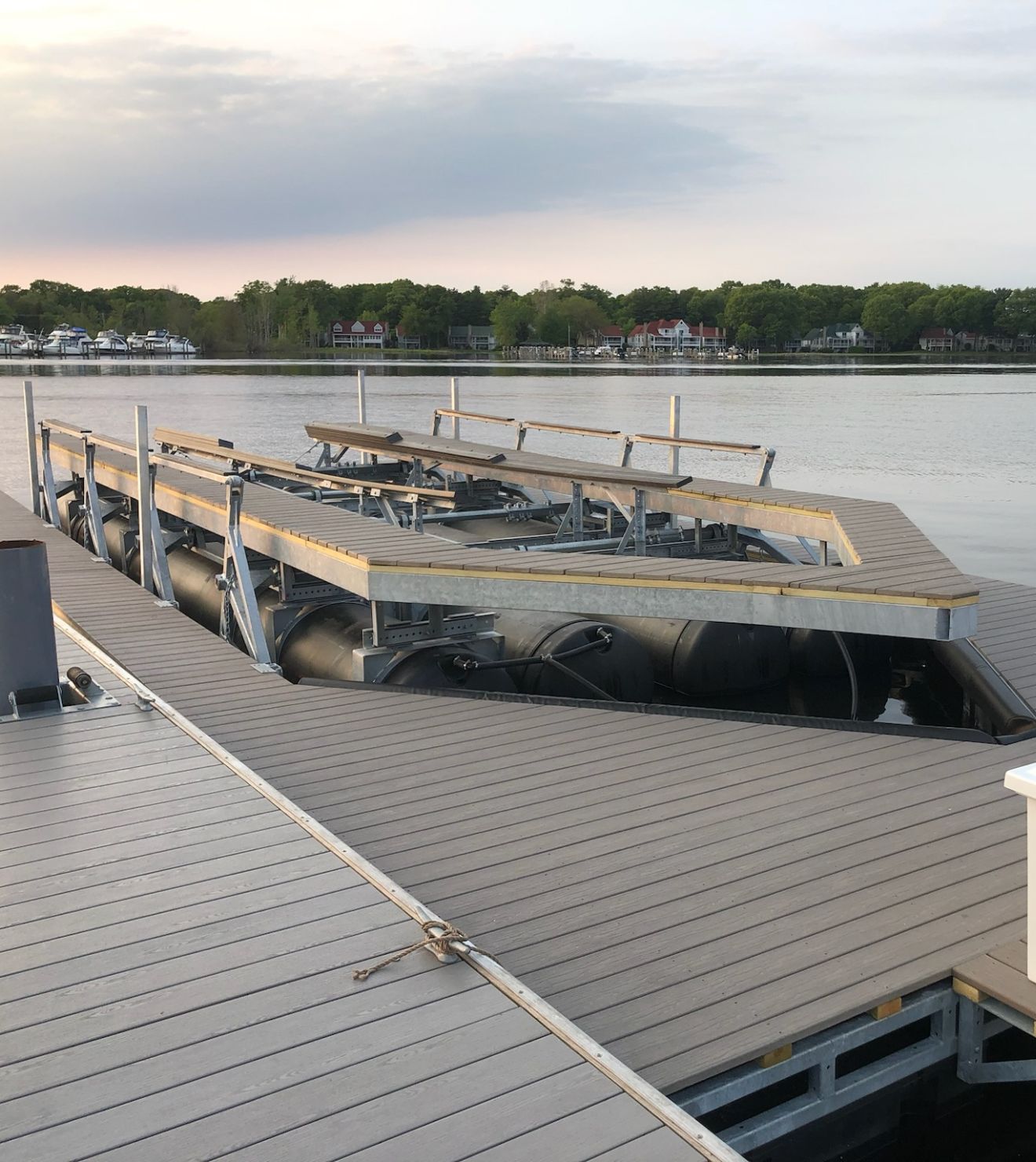
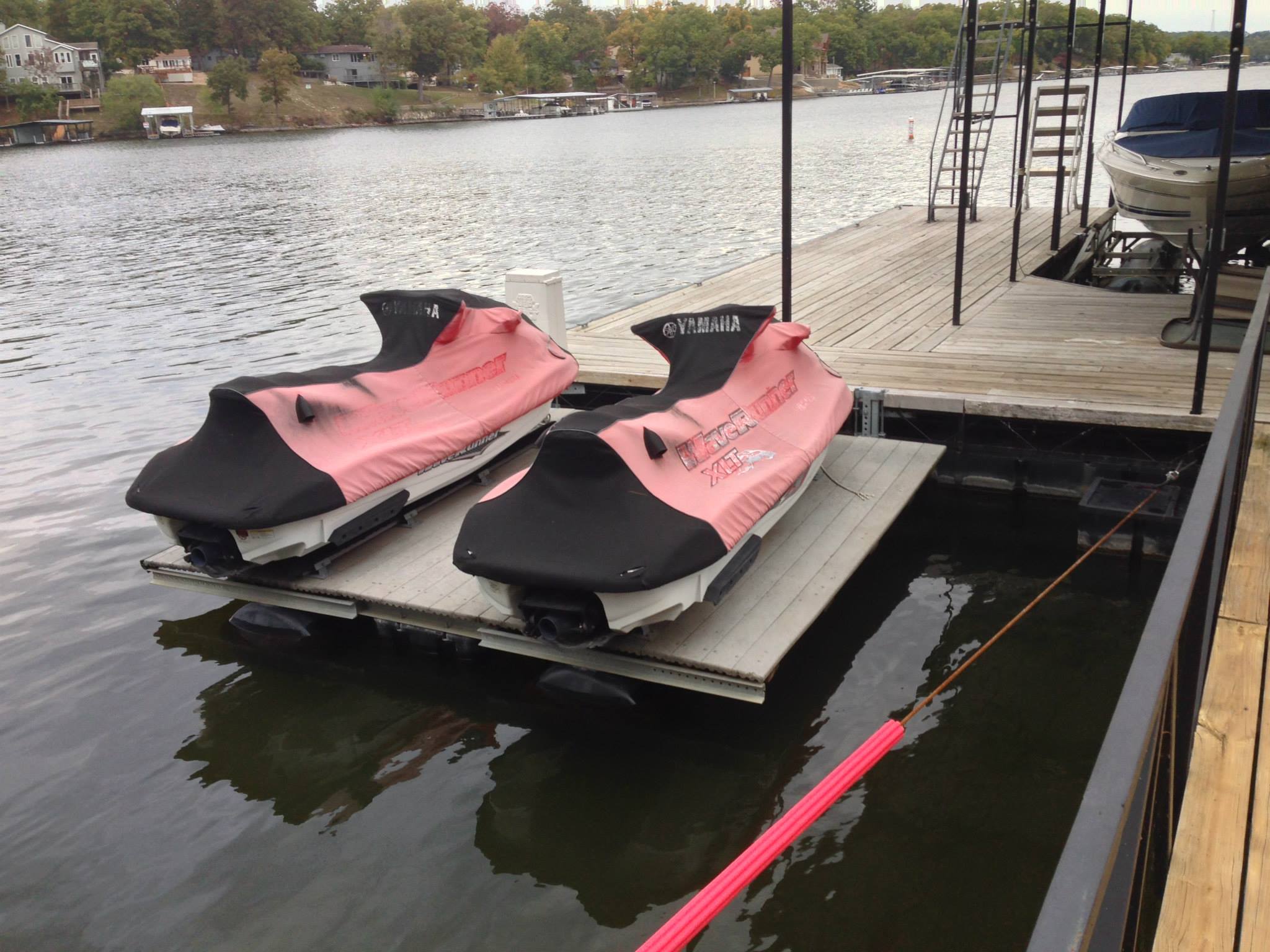
For more specialized installations, Poly Lift also offers custom fabrication, including offset configurations, rear work platforms, wraparound walkways, cat racks, and other solutions for challenging boats or slips.
Protect the boat you invested in. Tell Poly Lift about your Fountain, dock, and water conditions, and our team can help identify the right configuration.

Which Poly Lift Is Right for Your Fountain?
There is no single Poly Lift model for every Fountain boat. The right choice depends on loaded weight, hull, slip dimensions, dock structure, water depth, and how the owner wants to access the boat.
Poly Lift®: The Premium Custom-Fit Choice
Poly Lift is the strongest starting point for Fountain owners who prioritize customization, capacity options, long-term protection, and a system built around the boat.
The current Poly Lift lineup lists standard models from 2PL through 30PL, along with shallow-water and custom configurations. A model name should not be treated as a final capacity recommendation on its own. Poly Lift should confirm the correct model and setup after reviewing the exact boat specifications and dock.
Poly Lift is particularly compelling when the Fountain has:
-
A step hull or other specialized support requirements
-
Multiple engines or substantial stern weight
-
A high loaded weight
-
An unusually wide or narrow slip
-
A need for custom walkways or rear access
-
A dock exposed to heavy wakes or movement
-
A future upgrade that should be considered now
Roto Lift®: Value-Minded Performance for Compatible Boats
Roto Lift is designed by the manufacturers of Poly Lift and offers a value-oriented floating-lift option. Current Roto Lift models support boats from 5,000 to 11,000 pounds and fit slips from 8 to 14 feet wide. They feature reinforced lift arms, patented torsion clamps, roto-molded high-density polyethylene tanks, a five-year frame warranty, and a lifetime tank warranty.
Roto Lift may be a good option for a Fountain only when the boat's fully loaded weight, beam, hull, running gear, and slip fall within the model's specifications. Larger or more specialized Fountain configurations may call for a custom Poly Lift instead.
Custom Poly Lift Configurations
Some Fountain installations need more than a standard frame. Poly Lift's custom-fabrication capabilities can address unusual dock layouts, performance hulls, access needs, and weight distribution.
Useful options may include:
-
Offset lifts for stability and access in a challenging slip
-
Rear work platforms for easier engine and stern access
-
Wraparound walkways for boarding, cleaning, and maintenance
-
Custom racks and bunks shaped around the hull
-
Front-mount or side-mount arrangements where the slip requires a different layout
-
Poly Dock® walkways for a sturdy walking surface around the boat
Custom work is not about adding features for their own sake. It is about making the lift safer, easier to use, and better matched to the Fountain and dock.
Step 1: Calculate the Fountain's Fully Loaded Weight
The lift must be sized from the boat's real operating weight—not a dry-weight number copied from a brochure.
Dry Weight Is Only the Starting Point
Add the weight of everything that will normally be aboard when the Fountain is stored:
-
Outboard or sterndrive engines
-
Fuel
-
Freshwater and other fluids
-
Batteries
-
Anchors and line
-
Electronics
-
Safety equipment
-
Fishing or watersports gear
-
Coolers, tools, and personal gear
-
Factory and aftermarket options
Engine and fuel weight can be substantial, particularly with a multi-engine configuration. Use specifications for the exact year, model, engines, and options.
Build in an Appropriate Capacity Margin
The lift's rated capacity should exceed the calculated loaded weight. Common planning guidance includes a buffer of roughly 20% or moving to a rating at least 1,000 pounds above the expected load. Those figures are starting points, not universal engineering rules.
Poly Lift should confirm the appropriate capacity class for the actual configuration. Buying exactly at an estimated weight leaves no room for calculation error, added gear, future equipment, or changes in the boat.
Plan for the Next Boat or Upgrade
A well-built lift may remain at the dock through multiple boats. If a larger engine package, added equipment, or a future Fountain upgrade is likely, discuss it before ordering. The correct long-term choice may be a higher-capacity or more adaptable configuration now.
Step 2: Match the Lift to the Fountain Hull
Capacity tells you whether the lift can raise the weight. Fitment determines whether it can support the boat correctly.
Beam, Length, and Slip Clearance
Measure the boat and the slip. The Fountain needs enough clearance to enter without contacting arms, posts, cables, dock edges, or walkways. The lift also needs to fit within the slip while leaving practical access for boarding and maintenance.
Guide posts and centering aids can make loading more consistent, especially in wind or heavy wake, but they cannot correct a lift that is the wrong width.
Bunk and Rack Placement
V-hulls and step hulls require deliberate support. Bunks or racks should distribute the load across approved areas without pressing into hull steps, strakes, fittings, or unsupported surfaces.
The hull should not simply “look centered.” Bunk spacing, height, angle, and fore-aft position all need to match the boat and its center of gravity. Poly Lift's ability to customize for step-hull applications is especially valuable here.
Center of Gravity and Stern Weight
Multiple engines can shift substantial weight toward the stern. The lift must support that weight while keeping the boat balanced throughout raising and lowering.
Poly Lift should review the engine package and actual center of gravity when configuring the tank, frame, arms, and support system. Guessing can lead to uneven operation or unnecessary stress on the lift and hull.
Running-Gear and Engine Clearance
Confirm clearance for lower units, propellers, drives, trim tabs, transducers, and other underwater components. The boat needs room to enter, settle into position, rise, and lower without contacting a cross member or rack.
Roof, Hardtop, and Tower Clearance
Measure total height, including the hardtop, tower, radar, antennas, lights, and outriggers. A lift must raise the hull high enough for protection while still clearing the dock roof or canopy.
Step 3: Evaluate the Dock and Water
The best Fountain boat lift is also the one that works with the waterfront.
|
Dock or water condition |
What it means for the lift |
|
Floating dock |
A floating Poly Lift can move with the dock and water level |
|
Deep water |
Floating lifts avoid dependence on bottom-mounted legs |
|
Soft or uneven bottom |
Floating flotation can be more practical than a bottom-standing frame |
|
Changing water levels |
The lift follows the water rather than remaining at one fixed elevation |
|
Heavy wake or wind |
Configuration, attachment, guides, and stability need close attention |
|
Narrow slip |
Precise measurements or a custom/offset layout may be necessary |
|
Limited walkway space |
Front-mount, offset, or custom access solutions may help |
|
Shallow water |
A shallow-water configuration may be required |
|
Salt or brackish water |
Ask about the appropriate blower-style controls, materials, and electrical protection |
Dock Structure and Attachment
A boat lift transfers weight and operating forces to the dock. Joists, flotation, brackets, cables, fasteners, roof supports, and walkways all need to work with the lift.
Polyethylene flotation reduces downward load on the dock when the lift is fully submerged, but the dock still needs to be evaluated for the complete installation. A previous lift or smaller boat does not prove the dock can handle a heavier Fountain.
Wind, Wake, and Movement in the Slip
Lake traffic, waves, wind, and current can push a boat around while it is being loaded. The lift needs adequate clearance and properly placed guides so the driver can settle the Fountain into position without contacting the structure.
Once raised, the lift should keep the boat above normal wave action and reduce movement in the slip. Severe-weather procedures should be discussed with the installer; no lift should be assumed to eliminate storm risk.
Freshwater, Saltwater, and Electrical Protection
Freshwater installations and salt or brackish water installations can require different controls and material considerations. Poly Lift offers blower-style control units for salt or brackish conditions.
Waterfront electrical work should use appropriate marine-rated equipment, grounding, and GFCI protection. Correct installation can help reduce electrical hazards, corrosion, and electrolysis damage.
Easy Operation Makes the Lift More Valuable
A lift should make boating more convenient, not add another complicated process at the dock.
Straightforward Pneumatic Controls
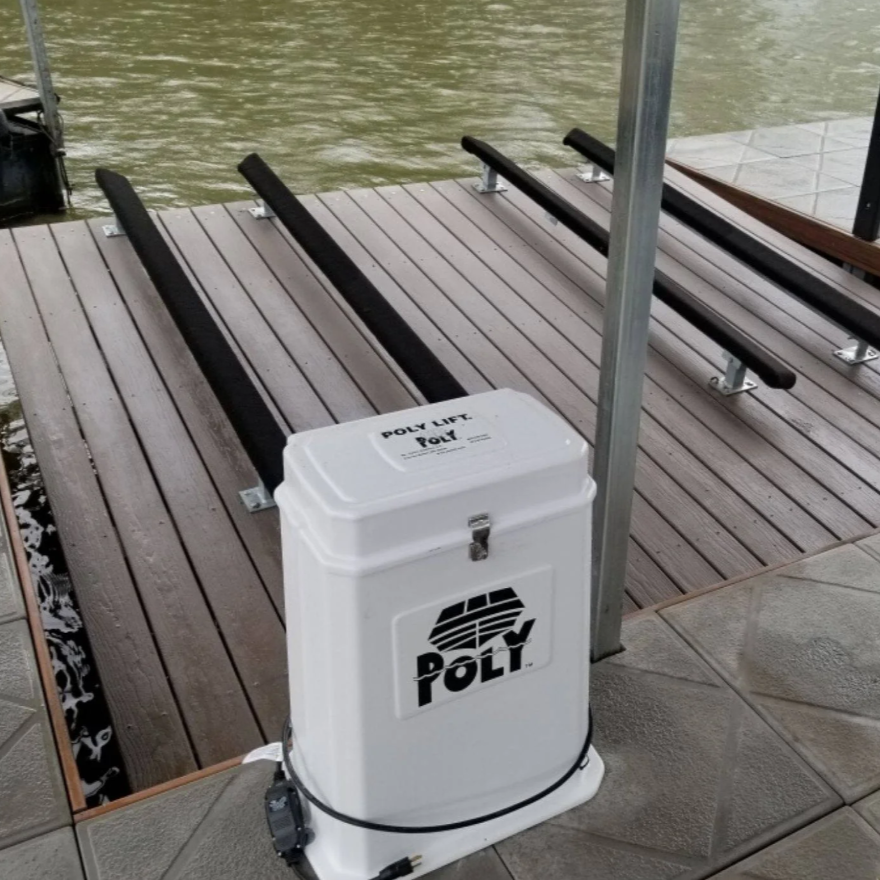
Poly Lift control systems use a straightforward handle-per-motor arrangement. The handles turn in the same direction, making the system easier to understand and operate than controls that require different valve positions for each side.
Available configurations include post-mounted and deck-mounted controls. Certain dual-motor systems include two motors, two valves, and two check valves and are designed so the lift can still be raised if one motor fails. The right control arrangement depends on lift size and layout.
Remote-Control Options
Owners who want keyless push-button control can ask about the Captain's Choice® remote-control system. Remote compatibility depends on the number of valves, blowers, lift configuration, and control package, so it should be specified with the lift rather than added by assumption.
Walkways and Stern Access
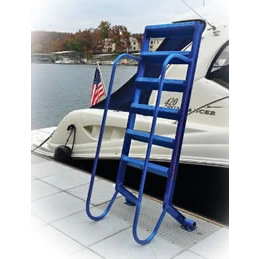
A Fountain owner may need regular access to engines, batteries, detailing areas, and other equipment. Rear work platforms, side walkways, and wraparound Poly Dock surfaces can make boarding, cleaning, inspection, and maintenance more comfortable.
Good access is not merely cosmetic. It can reduce awkward steps and make routine checks more likely to happen.
Professional Fitment and Installation Matter
A large performance boat lift is not just a frame dropped into a slip. The lift needs to be matched, assembled, attached, adjusted, and tested as a complete system.
Critical setup points include:
-
Lift and slip width
-
Tank and frame configuration
-
Bunk or rack spacing
-
Support height and angle
-
Center of gravity
-
Stern and engine clearance
-
Dock attachment
-
Walkway clearance
-
Roof clearance
-
Water depth through the normal range
-
Control-unit location and electrical connection
Small errors can make loading difficult, create uneven lifting, or place pressure where it does not belong. Working with Poly Lift or an experienced dealer helps avoid expensive fitment mistakes and ensures the system is adjusted for the real boat and dock.
What Does a Boat Lift for a Fountain Cost?
There is no useful one-price answer for a Fountain boat lift. Smaller standard lifts may cost a few thousand dollars, while larger, heavier, custom, or structurally complex projects can cost much more.
The final quote depends on:
-
Required capacity
-
Lift model and tank configuration
-
Hull rack or custom bunks
-
Slip dimensions
-
Shallow-water or custom fabrication needs
-
Control system and remote options
-
Walkways and rear work platforms
-
Dock modifications and attachment hardware
-
Electrical work
-
Delivery and installation
The cheapest lift is not necessarily the best value. An undersized or poorly fitted lift can lead to operating problems, premature wear, hull stress, and replacement costs. A properly matched Poly Lift is designed to protect the boat and reduce maintenance headaches over years of ownership.
Request a Poly Lift quote to compare the correct options for your Fountain and dock rather than relying on a generic price range.
Why a Hand-Wheel Motor May Not Be the Right Starting Point
Products such as the Boat Lift Buddy and Boat Lift Boss are designed to motorize compatible mechanical lifts that use a hand wheel. They may be useful for an owner whose existing lift is already correctly sized and fitted.
They do not solve the larger questions a Fountain owner must answer:
-
Is the frame rated for the loaded boat?
-
Does the cradle support the step hull correctly?
-
Is there enough stern and running-gear clearance?
-
Does the lift work with the dock and water level?
-
Is the existing structure worn or corroded?
A stronger or more convenient motor does not increase the capacity of an undersized frame or correct poor hull support. Poly Lift is a complete pneumatic lift system built around flotation, fitment, and dock integration—not a hand-wheel motor conversion.

How Poly Lift Compares With Other Lift Types
Different waterfronts can require different equipment. The table below explains where a floating Poly Lift fits in the broader market.
|
Lift type |
Best suited for |
Key consideration for a Fountain |
|
Poly Lift floating pneumatic lift |
Deep or changing water, floating docks, soft/uneven bottoms, custom hull support |
Strong overall choice when properly sized and configured |
|
Bottom-standing lift |
Calm, shallow water with a firm, level bottom |
May be impractical for heavier boats, deep water, or uneven bottoms |
|
Cantilever lift |
Smaller, lighter freshwater boats |
Limited capacity and lifting range make it unsuitable for many Fountain setups |
|
Elevator lift |
Seawalls, pilings, tight canals, or vertical shorelines |
Requires structural mounting and often professional engineering |
|
Hydraulic lift |
Owners prioritizing rapid, smooth powered operation |
Can handle substantial loads but may involve greater mechanical complexity and cost |
|
Piling-mounted lift |
Fixed docks and certain exposed-water applications |
Dock and piling structure must be engineered for the load |
The best choice is not determined by category alone. It is the system that safely matches the loaded Fountain, hull, slip, dock, water, and owner's priorities.
Common Mistakes Fountain Owners Should Avoid
Sizing From Dry Weight
Dry weight may not include engines, fuel, batteries, water, gear, and options. Always size from a realistic loaded figure.
Buying With No Capacity Margin
A lift rated exactly at an estimated load leaves no room for calculation error, added equipment, or a future upgrade.
Ignoring the Step Hull
Bunks and racks need to support approved hull areas. Generic placement can load the wrong surface or interfere with hull geometry.
Forgetting Engine and Stern Weight
The number and position of the engines affect the center of gravity and lift configuration. Length alone cannot capture this.
Measuring the Boat but Not the Slip
The lift, boat, guides, and walkways all need adequate room. Roof height and dock access matter too.
Assuming the Existing Dock Is Ready
A dock built around a smaller boat or different lift may need reinforcement, new attachments, or a different layout.
Choosing by Price Alone
Capacity, customization, build quality, warranty, service, installation, and maintenance savings determine long-term value.
Skipping Professional Adjustment
Even the right lift can perform poorly if the bunks, rack, tank balance, or dock attachment are wrong. Final adjustment under the actual boat is essential.
How to Get the Right Poly Lift for Your Fountain
The process is straightforward when you gather the right information first.
-
Identify the boat. Provide the Fountain's year, model, length, beam, hull type, and engine configuration.
-
Calculate loaded weight. Include fuel, fluids, batteries, gear, accessories, and options.
-
Describe the hull and running gear. Note steps, strakes, drives, props, trim tabs, and other clearance needs.
-
Measure the slip. Record inside width, length, water depth, roof height, and walkway arrangement.
-
Describe the dock. Explain whether it floats, how it is anchored, and how the current lift—if any—is attached.
-
Explain the water conditions. Include level changes, wake exposure, wind, current, bottom conditions, and freshwater versus saltwater.
-
Choose access and control options. Consider a remote, rear work platform, side or wraparound walkways, and other custom needs.
-
Plan for the future. Mention anticipated engine, equipment, or boat upgrades.
-
Review the recommendation. Confirm capacity, hull support, dimensions, warranty, installation, and final cost in writing.
-
Schedule professional installation and adjustment. Test the completed lift with the actual boat.
Frequently Asked Questions About Fountain Boat Lifts
What is the best boat lift for a Fountain boat?
For many Fountain boats, the best overall option is a properly sized, custom-fit floating pneumatic lift. It should support the hull correctly, accommodate the loaded weight and center of gravity, fit the slip, and keep the hull and running gear above the water. Poly Lift can be customized for V-hull and step-hull applications.
Can Poly Lift support a step-hull Fountain?
Yes. Poly Lift states that its systems can be customized for step-hull boats as well as V-hulls, pontoons, tritoons, and catamarans. The exact rack or bunk configuration should be designed around the Fountain's model, hull, and weight distribution.
How much lift capacity does my Fountain need?
Start with the boat's dry weight, then add engines if they are not included, fuel, water, batteries, gear, electronics, accessories, and other normal loads. Select a rated capacity above that loaded figure with a margin confirmed by Poly Lift for the exact setup.
Is a floating lift good for changing water levels?
Yes. A floating lift rises and falls with the dock and water, making it a strong option where levels fluctuate or a bottom-standing lift would be difficult to use.
Will Poly Lift work in deep water?
A floating Poly Lift does not depend on legs reaching the lakebed, so it can work well in deep-water slips. The dock, attachment, slip dimensions, and local conditions still need to be evaluated.
Does a boat lift reduce maintenance?
Keeping the Fountain out of the water can help reduce hull staining, algae, zebra mussels and other marine growth, blistering, corrosion, electrolysis exposure, and bottom-painting needs in many freshwater applications.
Can I add walkways or a rear work platform?
Yes. Poly Lift offers custom-fabrication options such as rear work platforms, offsets, and wraparound walkways. These can improve boarding, cleaning, and access to the engines and stern.
Does Poly Lift offer remote control?
Poly Lift offers remote-control options, including Captain's Choice systems. The correct package depends on the lift's control-unit, valve, and blower configuration.
What warranty comes with a Poly Lift?
Poly Lift's current published information states a lifetime warranty on flotation tanks, a five-year warranty on the structure and bushings, and a two-year warranty on the control unit. Review the complete terms with your quote.
How much does a Poly Lift for a Fountain cost?
Cost depends on capacity, hull support, lift model, slip, custom fabrication, controls, walkways, dock work, delivery, and installation. The best way to get an accurate number is to request a quote based on the exact Fountain and dock.
Protect Your Fountain With a Lift Built Around It
The best boat lift for a Fountain is not simply the one with the biggest capacity number. It is the lift that supports the hull correctly, handles the real loaded weight, fits the dock, works with the water, and remains dependable every time you return to the slip.
Poly Lift has been helping boaters solve those problems since 1975. With customizable support for step hulls and V-hulls, durable polyethylene flotation tanks, multiple capacity options, custom fabrication, strong warranty coverage, and experienced service, Poly Lift is built for owners who want lasting protection—not a one-size-fits-all compromise.
Give your Fountain a lift designed with the same attention to performance and fit.
Request a Poly Lift quote today or call (573) 374-6545 to discuss your boat, slip, and water conditions.